Eight Miles, Forty Years Asleep
A delivery-mile 1987 Buick GNX woke up after four decades and reset the market for the turbo Buicks.
A delivery-mile 1987 Buick GNX woke up after four decades and reset the market for the turbo Buicks.
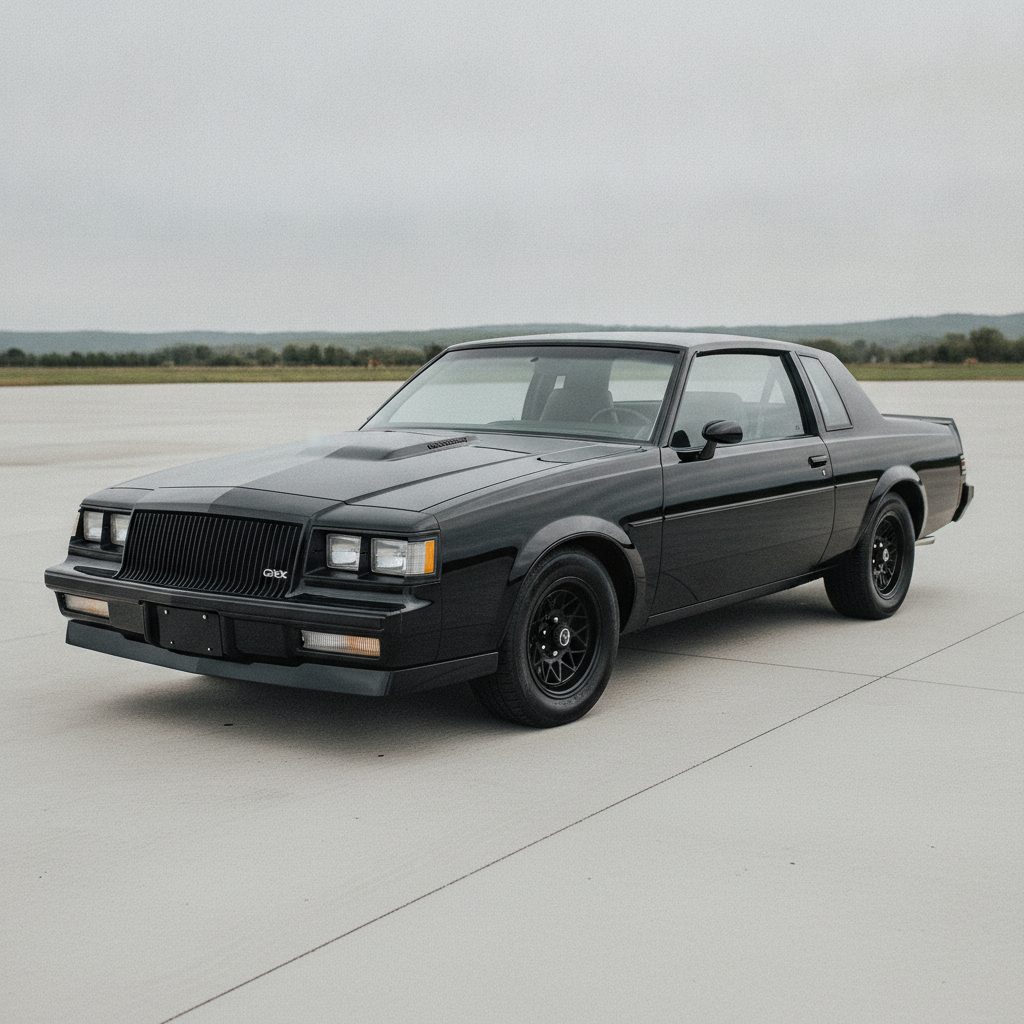
Only 547 GNXs were built, all black, all in 1987. This one had eight miles on it: bought, stored, and forgotten for nearly forty years. When it surfaced, it set a record.
The GNX was Buick's going-away present to itself. The rear-drive Regal was ending production, and with it the Grand National, the blacked-out turbo coupe that had spent the mid 1980s embarrassing cars with twice the cylinders. Rather than let it fade out, Buick partnered with ASC and McLaren Performance Technologies to build a final, hardened version of the car. The name was GNX, for Grand National Experimental, and it was sold through Buick dealers as a 1987 model only.
The timing is what made it a legend. In 1987, Detroit horsepower was still crawling out of the malaise era, and the idea that a Buick, of all things, would be the quickest American production car of its day sounded like a joke right up until the light turned green. The GNX embarrassed V8s with a turbocharged V6 when that was heresy, and the heresy is exactly what people loved.
The Grand National had spent years earning that setup. Through the mid 1980s, Buick's engineers kept turning up the boost on the turbo Regal, adding intercooling and sharpening the electronics until the blacked-out coupe was hunting down everything on the road, including cars from GM's own performance divisions. By 1987 the Grand National was already a cult hero. The GNX was the cult hero with the restrictions removed, built in the last months before the assembly line went quiet for good.
The heart of the car was the 3.8-liter turbocharged and intercooled V6, upgraded by ASC/McLaren with a Garrett turbocharger wearing a ceramic-impeller, a larger and more efficient intercooler, and recalibrated engine management. The official rating was 276 horsepower and 360 pound-feet of torque, and almost nobody believed it then or now. The real output was widely understood to be closer to 300, a figure Buick had good political reasons not to print.
The chassis got equal attention. A rear torque-arm setup with a Panhard rod put the power down properly, and the body wore flared fenders over 16-inch black mesh wheels. Inside, a Stewart-Warner analog gauge cluster replaced the stock electronics, and every car carried a numbered plaque on the dash. Period road tests put the GNX to sixty in under five seconds, quarter-mile times deep in the 13s, and its performance in the same conversation as exotics costing several times its sticker.
Buick kept the run deliberately tiny. Just 547 GNXs were converted, every one of them black, every one a 1987. The number was small enough that the cars were being treated as collectibles before the first one reached a customer, and plenty of buyers understood immediately that they were purchasing a piece of history rather than transportation. Some drove them anyway, and those cars became beloved. Others crated their cars away with delivery mileage, and those cars became time capsules.
A turbo V6 that beat the V8s, and a delivery-mile survivor that beat the market.
This car was the second kind of buyer's car, taken to its logical extreme. Bought new, put into storage, and then simply forgotten as decades went by, it accumulated eight miles in nearly forty years. That is delivery mileage, the odometer reading of a car that has only ever been driven on and off transporters and into a garage. When it finally surfaced, it was less a used car than a sealed artifact from 1987, down to the details a restoration can never put back.
That is what separates a car like this from the classic project-car discovery. As we have argued in our look at the end of the barn-find era, the market has stopped paying for dusty potential and started paying for verified preservation. An eight-mile GNX is the purest possible version of the latter. There is no restoration debate, no missing history to explain, and no question about what is under the paint. The car is its own documentation.
It is worth being honest about what a sealed car is and is not. Four decades of sitting is not kind to rubber, seals, and fuel systems, and a delivery-mile car is bought as an artifact, not as transportation. Nobody pays time-capsule money to go driving. The value lives in the preservation itself, in the factory-fresh details, and in the simple fact that nobody can ever make another one. The mileage is the asset, and every mile added would spend it.
When the eight-mile car sold, it set a record and reset the market for the turbo Buicks. A time-capsule example is now among the most valuable modern muscle cars in existence, and the effect radiates outward. The best documented, low-mile Grand Nationals and T-Types get pulled up behind it, because every record at the top of a model line becomes the new reference point for everything below it.
The same pattern is playing out across modern muscle, from the turbo Buicks to the final Dodge Last Call cars: the gap between delivery-mile examples and driven examples keeps widening. A record like this one does not just reward one seller. It teaches an entire market what perfect preservation is worth, and it makes the next time capsule easier to price.
The turbo Buick world is small and deeply documented, which is good news for careful buyers. The GNX carries its numbered plaque, the community knows the histories of most surviving cars, and originality is everything. Many Grand Nationals were modified for drag racing back when they were cheap, so stock, unmolested examples carry a serious premium. Miles, documentation, and originality set the price, in that order.
For anyone starting the hunt, the GNX and turbo Buick hub is the place to begin. The ceiling of this market now belongs to the sealed cars, but the soul of it still belongs to the drivers, the black coupes that spent the late 1980s proving that six cylinders and a turbocharger could humble anything in the next lane. Either way you buy one, you are buying the same story. One of them just has eight miles of it.
Buick built exactly 547 GNXs, all in the 1987 model year and all in black. The cars were converted from Grand Nationals by ASC and McLaren Performance Technologies, and each received a numbered plaque. The tiny production run made the GNX collectible from the day it went on sale.
The GNX was officially rated at 276 horsepower and 360 pound-feet of torque from its 3.8-liter turbocharged and intercooled V6. That rating was widely considered conservative, with real output generally understood to be closer to 300 horsepower. Period tests recorded acceleration that outran most V8 competitors.
The Grand National was Buick's regular-production turbo Regal. The GNX was a limited 547-car upgrade built with ASC/McLaren, adding a stronger Garrett turbo, a better intercooler, recalibrated management, a torque-arm rear suspension, flared fenders, 16-inch wheels, analog gauges, and a numbered dash plaque.
The GNX ranks among the most valuable American cars of the 1980s, and the delivery-mile record car reset the ceiling for the whole turbo Buick market. Values depend heavily on mileage, originality, and documentation. Driven examples trade well below sealed time capsules, but the entire market has moved up.
The muscle world, every morning. Auctions, builds, reveals. Free.