The 1,025-HP Demon Is Gone. Here's What Flips Next.
Dodge built the last one. We called eight dealers and three flippers to map where the money moves now, and which Last Call car is the real sleeper.
Dodge built the last one. We called eight dealers and three flippers to map where the money moves now, and which Last Call car is the real sleeper.
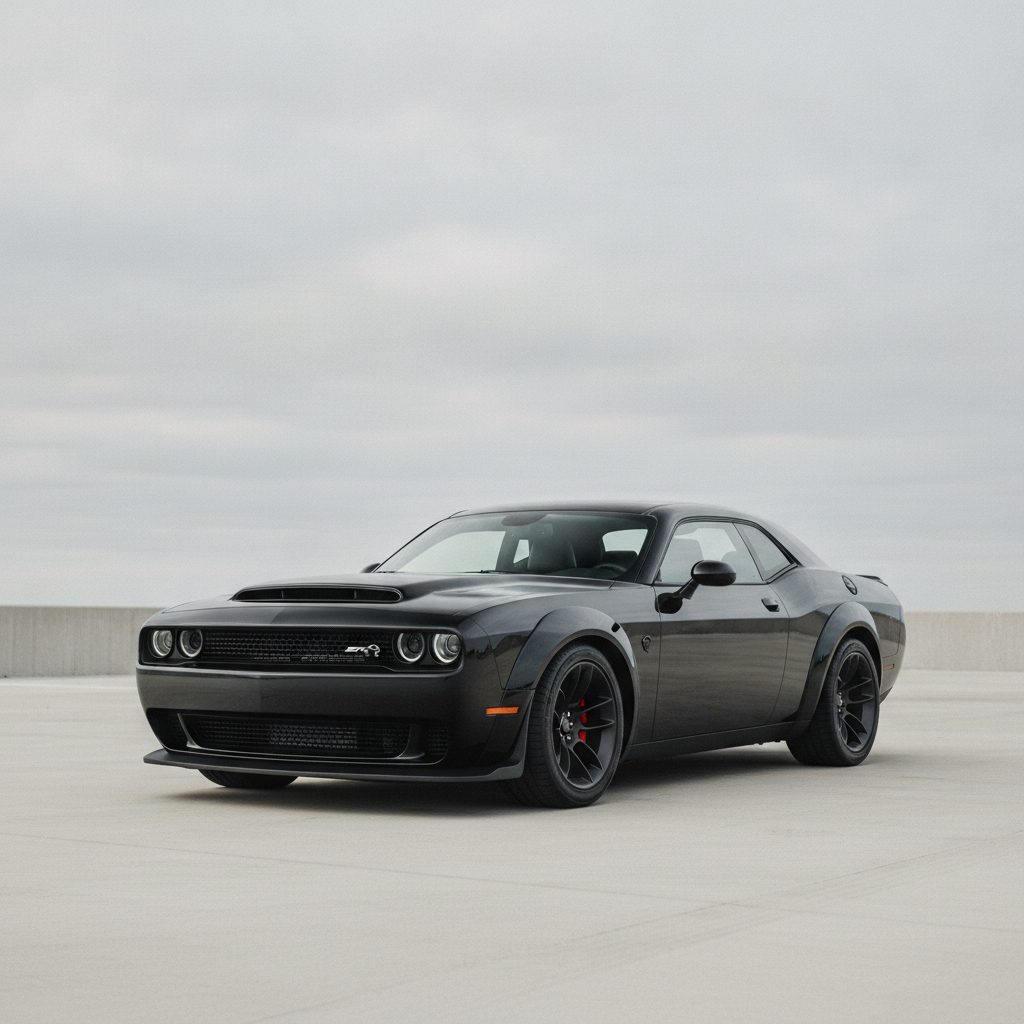
For twenty years, the modern Challenger did something no one expected: it kept the V8 muscle car alive well past its supposed expiration date. Now the last one has been built, and the market is doing what it always does when a legend goes out of production. It decides, quickly and expensively, which cars matter.
The Demon 170 is the headline. With up to 1,025 horsepower on E85 and a sub-two-second sixty time, it is the most powerful factory muscle car ever sold. It sold out almost immediately, and clean-title examples are already trading above sticker. That much is obvious. The interesting money is in what happens next.
The specification sheet reads like a dare. The Demon 170's supercharged 6.2-liter Hemi is a flex-fuel engine, and the fuel decides the personality. On premium pump gas it makes around 900 horsepower. Feed it E85 and it climbs to the full 1,025 horsepower and 945 lb-ft of torque, the numbers that made every headline. Dodge quoted zero to sixty in 1.66 seconds and an 8.91-second quarter mile at just over 150 mph, figures the company used to call it the quickest accelerating production car in the world.
The supporting hardware is pure drag strip: more boost, a transbrake and torque reserve for the launch, drag-tuned suspension, and sticky street-legal drag radials from the factory. The quarter-mile number even comes with an asterisk that tells you everything. The car is quick enough that NHRA rules require a roll cage at that performance level, so a stock Demon 170 outruns what a sanctioned strip will legally allow. Dodge sold a street car faster than the rulebook. Even the name is a wink: 170 refers to the proof of the ethanol the engine was built to drink.
The Demon 170 did not appear from nowhere. The modern Challenger returned in 2008, the 707-horsepower Hellcat rewrote the segment in 2015, and the original 840-horsepower Demon ran nines in 2018. Each escalation looked like the ceiling, and each turned out to be a step. The 170 was the logical, unhinged conclusion: a company spending its final V8 years turning the dial as far as it would physically go, because there was no next year to save anything for. Along the way the Challenger outlived the rivals that were supposed to bury it, selling on nostalgia, noise, and the stubborn fact that nothing else felt like it.
Scarcity was engineered in from the start. Dodge planned 3,300 Demon 170s for the US market plus 300 for Canada, and demand swamped the allocation almost the moment order books opened. The car served as the finale of the Last Call program, the farewell series that closed out two decades of modern Hemi muscle. Production ended when the final car left the Brampton, Ontario assembly line in December 2023, and with it went the V8 Challenger itself.
The rest of the Last Call run matters to this story too. Dodge sent the Challenger and Charger off with a set of limited special editions, from the Super Bee and Swinger cars to the 300-unit Black Ghost, a tribute to a legendary Detroit street racer. Below those sat the ordinary Scat Packs and R/Ts of the final model year: higher volume, lower drama, and, if history repeats, about to become important.
Every dealer we spoke to said the same thing: the base Last Call cars, the ones without the Demon badge, are the value play. They were built in larger numbers, they are cheaper today, and history says the "ordinary" version of a final-year legend appreciates once the halo car gets out of reach.
The halo car gets the headline. The ordinary one gets the appreciation.
We saw the same pattern with the 1971 Hemi cars, the 1987 Buick GNX, and the last air-cooled 911. The rarest, wildest version sets the ceiling. Then the money looks down the range for the next-cheapest way to own a piece of the story.
The GNX is the cleanest precedent. Buick built just 547 of them, all in 1987, and for years they were merely fast used cars. Then the market woke up, a delivery-mile GNX reset the record books, and every turbo Buick beneath it got pulled upward: Grand Nationals first, then T-Types, then ordinary turbo Regals. Collectors call it the halo effect, and it is the most reliable pattern in the modern market: the flagship lifts the whole family. The same dynamic played out with 1971 Mopars once Hemi prices went vertical, and with air-cooled 911s once the last ones left the line. There is no reason to expect the final V8 Challengers to behave differently.
Mileage matters more than ever on these. A delivery-mile Demon is a different asset than a driven one, and the gap is widening. If you are buying to enjoy it, buy the driven car and save the premium. If you are buying to store it, the math only works at the very top.
That split is new to modern muscle but old news to collectors. The moment production ends, every odometer becomes a one-way meter, and the population of untouched cars only shrinks. Documentation matters nearly as much: window stickers, original wheels, unmodified drivetrains, and clean title history separate collector-grade cars from merely used ones. None of it matters if you bought the car to drive it, which, for the record, is what a Challenger is for.
So map the ladder. The Demon 170 sits at the top, priced like the trophy it is. Below it, the named Last Call editions carry their own collectibility, with production counts small enough to matter and a story attached to each. Below those sit the final-year Scat Pack and R/T cars, the everyday V8 Challengers and Chargers that nobody thought of as collectible while you could still order one. History says that third rung is where patience gets paid, because the supply stopped forever while the cars are still being used up as transportation.
The takeaway is simple. The Demon 170 is the trophy, and it is priced like one. But the smart muscle money is already one step down the ladder, buying the last ordinary V8 Challengers before the rest of the market notices they are gone too.
Dodge planned 3,300 Demon 170s for the United States market plus 300 more for Canada, and the allocation sold out almost immediately. That deliberately limited run, combined with the car's headline performance and its role as the final Challenger halo, made the Demon 170 an instant collectible the day it was announced.
The Demon 170's supercharged 6.2-liter Hemi is a flex-fuel design. On E85 it produces 1,025 horsepower and 945 lb-ft of torque; on 91-octane pump gas it makes roughly 900 horsepower. The engine adjusts its output automatically based on the ethanol content it detects in the fuel.
Dodge quoted zero to sixty in 1.66 seconds and a quarter mile of 8.91 seconds at just over 150 mph. That quarter-mile performance is quick enough to require a roll cage under NHRA rules, meaning a stock example outruns what a sanctioned drag strip will legally allow.
Effectively, yes. The Demon 170 was the finale of the Last Call program, and Challenger production ended at the Brampton, Ontario plant in December 2023. It closed out two decades of the modern Hemi-powered Challenger and stands as the most powerful factory muscle car ever sold.
The muscle world, every morning. Auctions, builds, reveals. Free.