A '68 Mustang With 480 Modern Horsepower
A nine-month home-garage build put a modern Coyote heartbeat in a 1968 coupe. And it drives like a car from 2026.
A nine-month home-garage build put a modern Coyote heartbeat in a 1968 coupe. And it drives like a car from 2026.
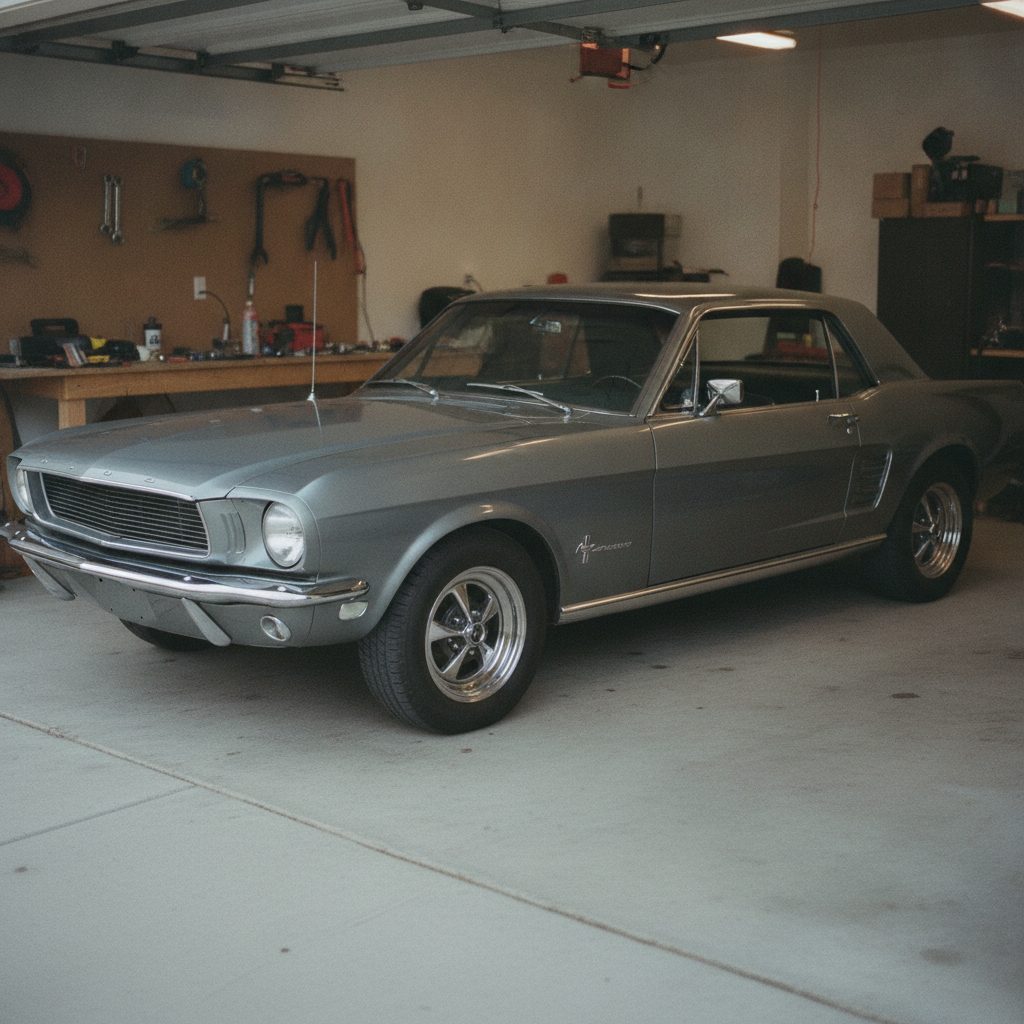
The best swaps are the ones you cannot hear coming. This gunmetal-grey 1968 coupe looks like a clean survivor until the hood opens and a modern 5.0-liter Coyote stares back, wearing just enough vintage dress to keep the neighbors guessing.
The owner bought the car barely running and spent nine months turning a tired driver into something genuinely quick. The Coyote makes around 480 horsepower to the crank, backed by a modern six-speed manual and a reworked rear end that can actually put the power down. On paper that reads like a parts list. In a home garage, on nights and weekends, it is nine months of fabrication, wiring, and quiet problem-solving, and the finished car wears none of the struggle. That is the tell of a good build. The hard parts are invisible.
The Coyote is Ford's modern 5.0-liter V8, introduced in the 2011 Mustang GT at 412 horsepower and sharpened with every generation since. It is a double-overhead-cam, 32-valve design with variable cam timing on all four cams, it revs past 7,000 rpm, and by the third generation the factory rating had climbed to 460 horsepower. It idles like an appliance, pulls like a race engine, and shrugs off daily use, which is exactly the combination a classic body needs.
Chevrolet people have been doing this math for years with junkyard truck engines, and our $400 junkyard 5.3 dyno test shows why the LS ate the budget end of the hobby. The Coyote is the Ford answer, and it is a different pitch. It costs more, but it keeps a Ford in a Ford, and nothing else at any price sounds quite like a four-valve 5.0 clearing its throat at seven grand.
Nothing about this swap is a bolt-in. The Coyote's twin-cam heads make it dramatically wider than the 289 and 302 small blocks the engine bay was drawn around, and on a 1965 to 1970 Mustang the factory shock towers sit exactly where the cam covers want to live. Builders solve it one of two ways: cut and reinforce the towers for clearance, or remove them entirely in favor of an aftermarket coilover front end, which carries the side benefit of fixing steering geometry Ford drew in 1964.
The engine is only the opening move. A swap this deep needs a low-profile oil pan, custom mounts, a high-pressure return-style fuel system, a radiator and electric fans sized for a modern engine's heat, and a control pack to make the factory computer happy outside a factory car. Then comes the transmission tunnel work for the six-speed, a custom driveshaft, and a rear axle with the gears and strength to live behind 480 horsepower. Every one of those jobs is documented and solvable. All of them together are why the build took nine months.
What makes the build work is restraint. The interior stays period-correct, the stance is right, and nothing screams for attention. It idles clean, it has air conditioning, and it will cruise all day: the things that make a classic actually usable in 2026.
The trick is not the power. It is making 480 horsepower feel like it belongs in a 1968 car.
That is the part that surprises people on their first ride. The car starts on the first crank on a cold morning, holds a lazy cruise rpm on the highway thanks to the overdrive gearing, and never loads up, never smells rich, never asks for a warm-up ritual. Then the throttle opens and the whole personality changes. A stock 1968 coupe with the two-barrel 302 was a pleasant cruiser rated around 230 gross horsepower. This one runs zero to sixty in the mid fours. It is a 2026 drivetrain wearing a 1968 suit, and the tailoring is the whole point.
The chassis had to keep up. Modern power in a fifty-year-old shell exposes every worn bushing and lazy drum brake, so the supporting cast matters as much as the star: fresh suspension, real front discs, and tires with enough contact patch to be honest. The reworked rear end carries gearing chosen to work with the six-speed's overdrive, deep enough to launch hard, tall enough to cruise quietly. None of it shows in photographs. All of it shows in the first mile behind the wheel.
Nobody finishes one of these for the price of the engine. The crate motor and control pack are the checks everyone plans for. The money that sneaks up on a builder is everything around them: the fuel system, the cooling package, the brake conversion, the driveshaft, the wiring hours, and the hundred small brackets and fittings that never appear on anyone's budget spreadsheet. The honest rule of thumb in the swap community is that the engine is the easiest check you will write, and the last twenty percent of the build consumes the most patience.
The LS wins on price, packaging, and parts-counter ubiquity. It is physically more compact than the Coyote despite its pushrod architecture, it drops into almost anything, and the aftermarket has solved every problem twice. The Coyote answers with character and correctness. It revs harder, its top-end rush feels genuinely exotic, and in a Ford body it preserves the thing purists and future buyers quietly care about: brand-matched blood. For a Chevelle or a Camaro, the LS is the obvious call. For a Mustang, the Coyote has become the default answer, and cars like this coupe are the reason.
It is the template for the modern muscle build: keep the soul, upgrade everything you cannot see. A decade ago, purists treated swapped cars as ruined originals. The market has stopped agreeing with them. Clean, well-documented restomods now bring serious money precisely because they get driven, and a swapped coupe that starts every morning appeals to a far wider buyer pool than a numbers-matching car nobody dares to use. It is exactly the kind of build that keeps first-generation Mustang values climbing.
There is a caveat, and it matters: execution is everything. A hacked-together swap hurts a car as badly as rust. Documentation of the parts, photos of the process, and professional-grade wiring separate the cars that bring a premium from the ones that get discounted at every sale. Done right, the formula works so well that we keep featuring it, most recently on a daily-driven restomod fastback built with the same philosophy: modern heart, vintage face, no excuses.
A Coyote swap uses Ford's modern 5.0-liter V8, standard in the Mustang GT since 2011 and closely related to the F-150's 5.0. It is a double-overhead-cam, 32-valve engine with variable cam timing, rated between 412 and 486 horsepower from the factory depending on generation, and sold new as a crate engine.
Yes, but not as a bolt-in. The Coyote's twin-cam heads are far wider than the original small block, so 1965 to 1970 Mustangs need modified shock towers or an aftermarket coilover front end, plus a swap oil pan, custom mounts, an upgraded fuel system, and a control pack for the electronics.
Stock crate Coyotes are rated from 412 to 486 horsepower depending on generation, and most naturally aspirated swaps land near those numbers at the crank. Intake, exhaust, and tuning add more, and supercharged builds clear 700 with ease. The 1968 coupe featured here makes around 480 horsepower.
It depends on the car. The LS is cheaper, physically more compact, and easier to source, which makes it the default for most brands. The Coyote costs more and demands more room, but it revs harder and keeps a Ford body all Ford, which purists and future buyers genuinely value.
The muscle world, every morning. Auctions, builds, reveals. Free.