Shelby's 1965 Skunkworks
How Carroll Shelby turned an ordinary Mustang into a road-race legend. Fast, and on a shoestring.
How Carroll Shelby turned an ordinary Mustang into a road-race legend. Fast, and on a shoestring.
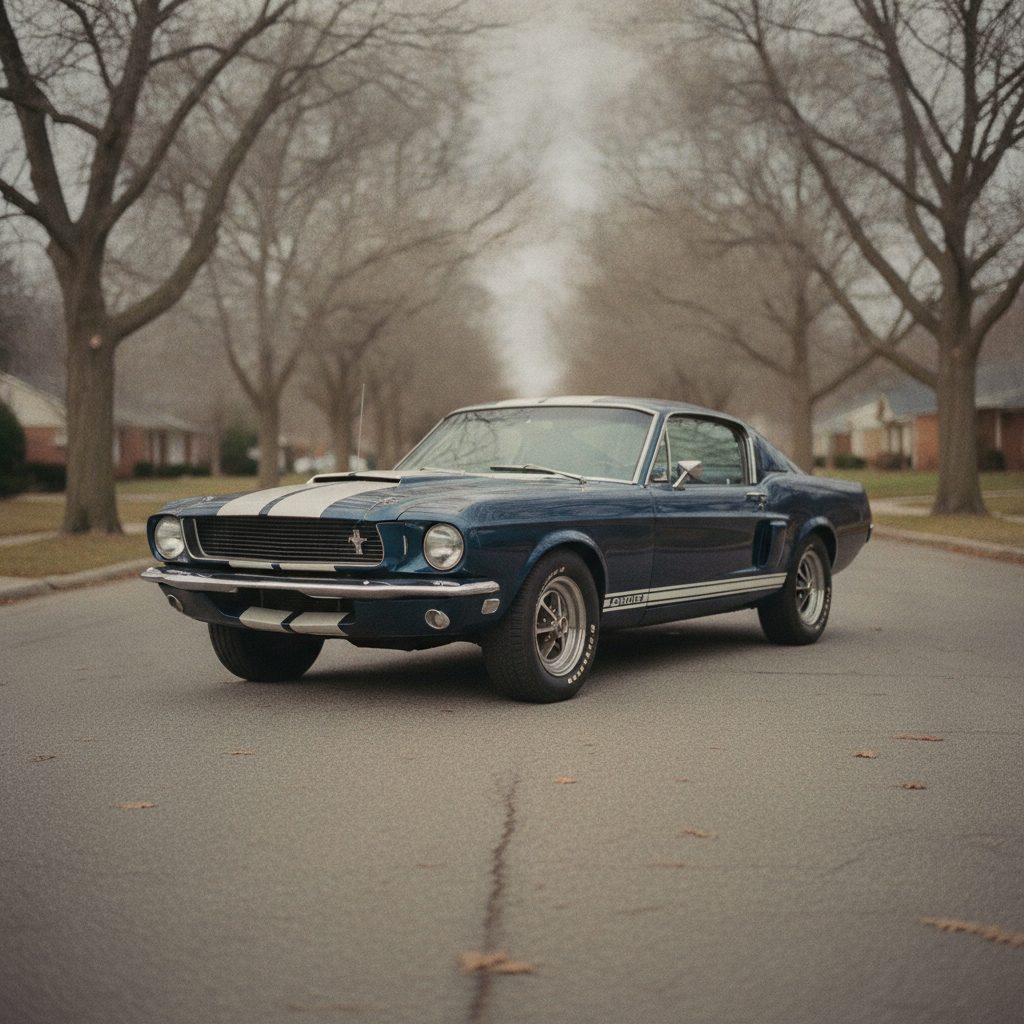
Ford built the Mustang. Shelby built the legend. In 1965, Carroll Shelby's team took a fastback, stripped it, stiffened it, and hot-rodded the 289 into the GT350: a genuine road racer with license plates.
It was crude, loud, and brilliant. The GT350 established the Shelby name on Mustangs and set the template for every hot Ford that followed. What gets lost in six decades of retelling is how fast and how cheaply it all happened. Ford needed a performance image for its new pony car. Shelby needed a project beyond the Cobra. The answer came together in a matter of months in a small California shop, and it changed both companies for good.
The Mustang was a sales phenomenon from its April 1964 launch, but it had an image problem in exactly one room: the one where racers gathered. It was a secretary's car with optional stripes, said the critics, and the Corvette crowd enjoyed saying it loudest. Ford wanted the Mustang homologated for SCCA production-class racing, and the SCCA required a genuine two-seat sports car with competition credibility. Carroll Shelby, fresh off building Cobras and beating far more expensive machinery with them, was the obvious contractor. His assignment was blunt: make the Mustang a race car, and build enough street versions to satisfy the rulebook.
The rear seat came out, which conveniently reclassified the fastback as a two-seater in the SCCA's eyes. The name, by Shelby's own telling, came from nothing more romantic than the number of feet between two buildings at his shop. He liked that it carried no promises. The car would make its own meaning.
Every GT350 started as a Wimbledon White fastback with the K-code 289: Ford's solid-lifter High Performance small block, rated 271 horsepower from the factory. Shelby American added an aluminum high-rise intake, a big Holley four-barrel, free-flowing headers feeding side-exit exhausts, and a larger oil pan. The result was rated at 306 horsepower at 6,000 rpm, and unlike a lot of factory arithmetic from the era, the number was believable. Backed by an aluminum-case Borg-Warner four-speed and a Detroit Locker rear end, the drivetrain was racing equipment sold with a warranty.
The rest of the package was equally purposeful. A fiberglass hood with a functional scoop saved weight over the nose, the blue rocker stripes carried the name, and the optional Le Mans stripes over the top became so associated with the car that most people are surprised to learn many 1965s left the shop without them. Curb weight came in under a comparable stock fastback, and every pound that remained had been repositioned with intent.
The engine got the headlines, but the chassis work made the car. Shelby's crew lowered the front upper control arms to improve camber control, fitted a thicker front anti-roll bar, added Koni shocks, and tied the shock towers together with an export brace and Monte Carlo bar to stiffen the nose. Quicker steering, metallic brake linings, and wide 15-inch wheels finished the job, while over-ride traction bars tamed the rear axle and early cars carried the battery in the trunk for weight distribution. None of it was subtle, and all of it worked. Contemporary road tests marveled that a Mustang could corner like a legitimate sports car, because in every way that mattered, this one was.
Ford built the car. Shelby built the myth.
For customers who wanted the whole race car, Shelby built the GT350R: stripped interiors, fiberglass front aprons, plexiglass side windows, blueprinted engines, and full competition preparation. Only about three dozen R models were produced, and they did exactly what homologation specials are supposed to do. GT350s won the SCCA B-Production national championship in 1965 and kept winning it for two more seasons, humbling far more exotic machinery and cementing the street car's credibility. Every argument about whether the GT350 was a real race car ends with that record. Today those competition cars are the holy grail of the breed, restored to the liveries they raced in and vetted down to the last rivet before they change hands.
The 1965 car was so uncompromising it was almost unsellable. It was loud, it steered heavy, the Detroit Locker clunked around every corner, and it rode like the race car it was. For 1966, Shelby added color choices, an optional back seat, an optional automatic, and quieter exhaust, sanding the roughest edges off in the name of volume. The most famous 1966 development was the GT350H: roughly a thousand cars built for Hertz, many in black and gold, rented to the public under the Rent-a-Racer program. The stories of Hertz cars coming back on Monday morning with roll-bar mounting holes and race-worn tires are part of Shelby folklore, and some of them are even true.
Collectors split on the two years in a predictable way. The 1965 cars carry the purity premium: first year, one color, no compromises. The 1966 cars offer the same essential experience with easier living and, in the Hertz cars, a story no other muscle car can match. Neither is the wrong answer. Both are appreciating assets with racing pedigree, and both have been climbing for decades as the supply of honest, documented cars gets thinner every year. Survivorship favors the patient: cars surface from long-term ownership only rarely, and when they do, the phone calls start before the advertisement runs.
Just 562 GT350s were built for 1965, counting street cars, competition cars, and prototypes, and that scarcity wrote the market's script decades ago. These are blue-chip collector cars. Documented street cars trade deep into six figures, exceptional examples go higher, and the R models occupy a seven-figure universe reserved for the most important American racing artifacts. Provenance drives everything: the Shelby registry documents these cars individually, and a GT350 with continuous history, original sheet metal, and its born-with drivetrain sits at the very top of the Mustang world.
The GT350's influence outlived its production run. When Ford went Trans-Am racing at the end of the decade, the homologation playbook Shelby wrote produced the Boss 302, another street Mustang built to satisfy a rulebook and better for it. Every track-focused Mustang since, from the Boss cars to the modern revivals wearing the Shelby name, traces its bloodline to 562 white fastbacks from 1965. Not bad for a car named after the distance between two buildings.
A documented 1965 GT350 is a blue-chip collectible that trades deep into six-figure territory, with the finest street cars commanding more and the rare GT350R competition cars reaching seven figures. Condition, originality, and documented history through the Shelby registry drive the price more than any other single factor.
Shelby American built 562 GT350s for the 1965 model year, a figure that includes street cars, roughly three dozen GT350R competition cars, prototypes, and drag cars. Every 1965 car was a Wimbledon White fastback, and each one is individually documented in the Shelby registry, which makes fakes hard to pass.
The 1965 GT350 used Ford's K-code 289 High Performance V8, a solid-lifter small block rated 271 horsepower in stock form. Shelby added an aluminum high-rise intake, a larger Holley four-barrel, and free-flowing exhaust headers, raising the rating to 306 horsepower at 6,000 rpm, paired with a Borg-Warner four-speed.
Beyond the hotter 289, the GT350 received serious chassis work: lowered upper control arms, a bigger front anti-roll bar, Koni shocks, an export brace, quicker steering, a Detroit Locker rear end, and a deleted rear seat. It was a homologated SCCA racer sold for the street, not a trim package.
The muscle world, every morning. Auctions, builds, reveals. Free.