The 1969 Boss 302: Ford's Trans-Am Weapon
Ford did not build the Boss 302 to sell cars. It built it to win a championship, and the street version came along for the ride.
Ford did not build the Boss 302 to sell cars. It built it to win a championship, and the street version came along for the ride.
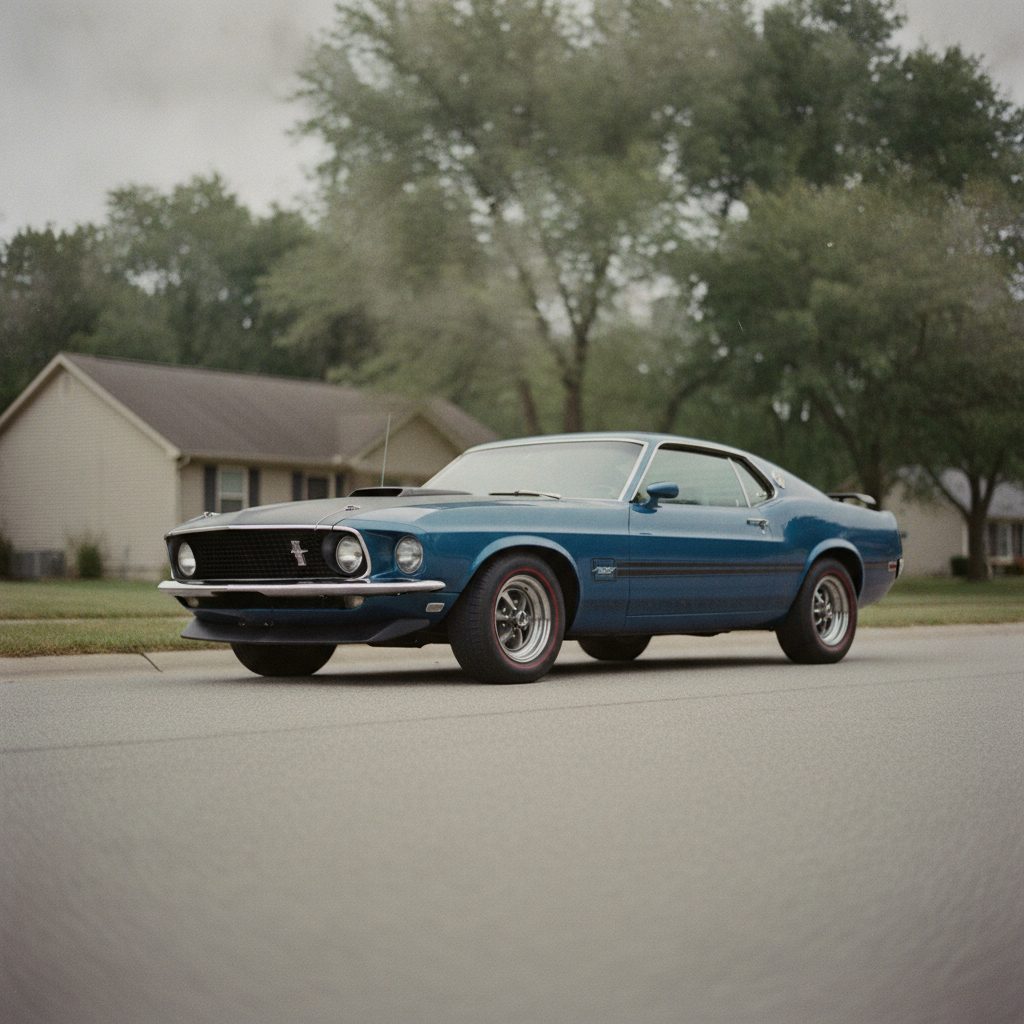
The Boss 302 exists because of one number in the Trans-Am rule book. To go racing in the SCCA's most competitive class in 1969, Ford had to sell a street version of the Mustang with a 302 cubic inch V8. So it did, and the car it built to satisfy that homologation rule turned out to be one of the best-handling muscle cars of the era.
Homologation cars are usually compromises, built grudgingly to a quota and forgotten. The Boss 302 was the opposite. Ford was locked in a very public war with Chevrolet for the Trans-Am championship, the showroom version of that war was Mustang against Camaro, and the company decided that if the rules forced it to build a street car, it would build one worth bragging about.
The SCCA's Trans-Am series capped engines at five liters, 305 cubic inches, and required manufacturers to sell road-going versions of what they raced. Chevrolet had answered first with the Camaro Z/28 and its high-winding 302. Ford's response for 1969 was the Boss 302, a car whose entire specification flowed backward from a race track. The street car existed so the race car could, and buyers got a detuned racer rather than a dressed-up commuter, which is precisely why the car still matters.
The rulebook also demanded volume. Homologation required Ford to actually sell these cars in meaningful numbers, not build a dozen and call it a production model. That requirement is the only reason ordinary buyers in 1969 could walk into a Ford dealership and drive out in a barely civilized Trans-Am racer, and it is the reason collectors have real cars to fight over today.
The engine was the star. Ford took the tough four-bolt 302 block, bolted on the big-port canted-valve heads from the Cleveland program, added a solid-lifter cam, a 780 cfm Holley four-barrel, and a high-rise intake, and called it 290 horsepower at 5,800 rpm. Everyone who drove one knew that number was polite. The rating conveniently matched the Camaro Z/28's own suspiciously identical 290, kept the insurance men calm, and bore little relationship to what the engine did above five grand.
The character of the engine was all top end. Those enormous ports made it soft below 3,000 rpm and ferocious above it, pulling hard toward the 6,150 rpm rev limiter Ford fitted to protect warranties from exuberant owners. A forged crankshaft and stout internals meant it could live up there. In an era of lazy big-block torque, the Boss revved like nothing else in the Ford catalog, and drivers either learned to keep it on the boil or never understood the car at all.
What set it apart from the big-block crowd was balance. Stiffer springs, a quicker steering box, staggered rear shocks to fight axle hop, and wide F60 rubber gave it real corner speed, while heavy-duty spindles and power front discs handled the punishment. This was not a straight-line bruiser. It was a road racer with license plates, and it drove like one. Period testers routinely called it the best-handling Mustang yet built, and more than a few put it ahead of anything else Detroit sold that year at any price.
Ford built it to satisfy a rule. Enthusiasts kept it because it was the best-driving Mustang of the decade.
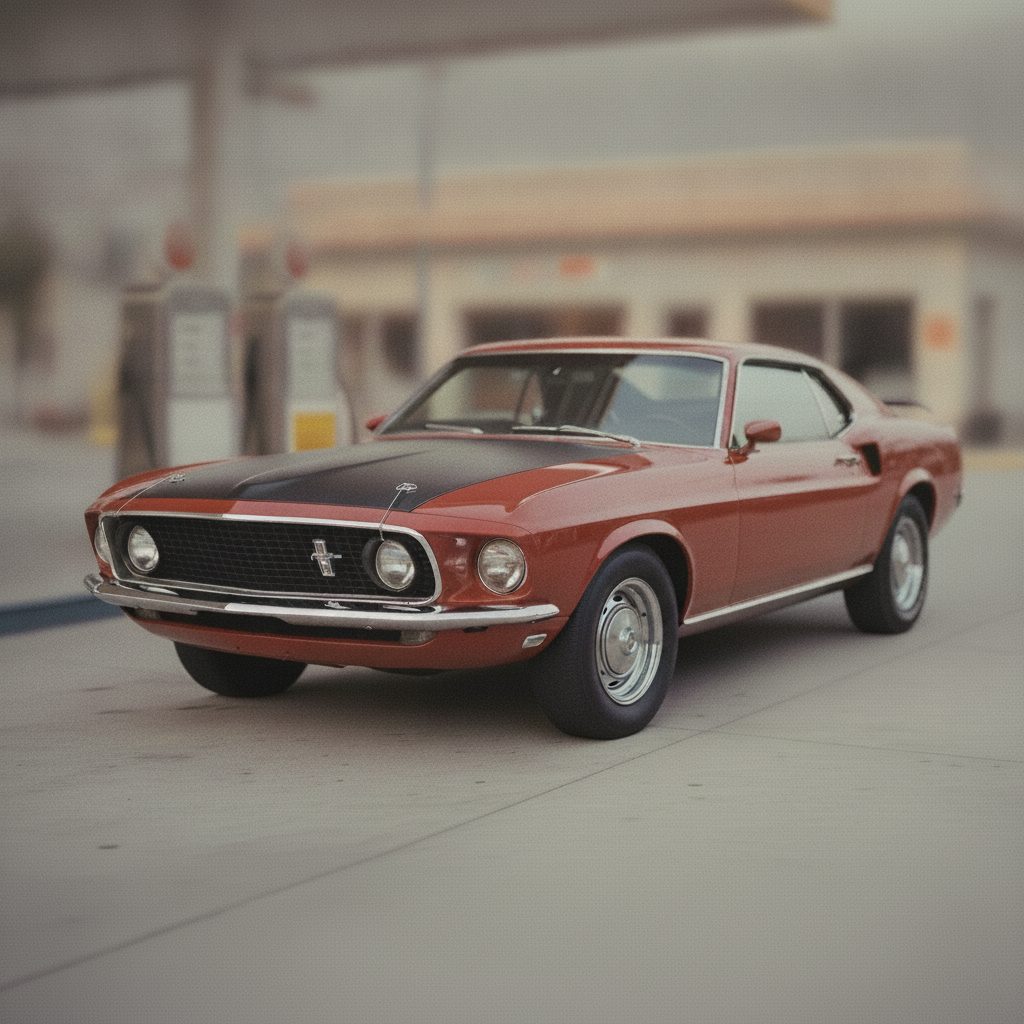
The styling backed up the mission. The blackout hood, the reflective C-stripe, and the front spoiler came from the wind tunnel and the race program, not the marketing department. The package was pulled together by a designer newly arrived from General Motors, who stripped the fake scoops off the standard car, added a chin spoiler that actually worked, and kept the graphics honest. Restraint was the theme: the rear wing and window slats stayed on the options sheet, and nothing on the car was decoration pretending to be function.
Every Boss 302 conversation eventually arrives at the Camaro Z/28, because the two cars are mirror images. Both used high-revving 302s rated at exactly 290 horsepower. Both existed to homologate Trans-Am racers. Both handled far better than the muscle car norm. The Chevrolet revved a touch happier; the Ford carried bigger-breathing heads and, in most period comparisons, the stronger mid-range. On track, the rivalry was settled season by season: Chevrolet took the 1969 Trans-Am title, and Ford answered by winning the championship in 1970. On the street, the argument has now lasted more than half a century and shows no sign of concluding, which is exactly how both companies would have wanted it.
Parnelli Jones and George Follmer handled the rest on track, and the 1970 season became the stuff of Trans-Am legend: factory teams, packed grids, and a championship Ford finally carried home. It remains the high-water mark of the series, and the Boss 302 street car is the piece of it you could park in your own driveway.
Ford built 1,628 Boss 302s for 1969 and 7,013 for 1970, and the two years are easy to tell apart. The 1969 car wore four headlights and the reflective C-stripe; the 1970 got single headlamps flanked by fake outboard scoops and a stripe that started on the hood and hooked down the fender. Under the skin, 1970 brought slightly smaller intake valves, a change that cost little on the street, plus a handful of running refinements. Purists prize the 1969 for its first-year rawness and far lower production, while the 1970 offers the developed version of the same idea. Neither is the wrong answer, and the market treats both as serious cars.
Today a documented 1969 Boss 302 is a blue-chip Mustang. Values have climbed steadily for decades, clean cars rarely sit for long, and the model's Trans-Am pedigree gives it a story ordinary muscle cannot match. As with every homologation special, documentation rules the market: matching numbers, Marti Report paperwork, and honest sheet metal separate the serious cars from the projects. It sits in the same collector conversation as the 1965 Shelby GT350, the other Mustang built because a rulebook demanded it, and both keep proving that the fastest way to create a legend is to build a race car and hand it license plates. It remains the car that proved Ford could build a Mustang to do more than run fast in a straight line.
Ford built 8,641 first-generation Boss 302s across two model years: 1,628 cars for 1969 and 7,013 for 1970. That volume satisfied SCCA homologation requirements while keeping the car genuinely rare. Ford later revived the name for 2012 and 2013 with a modern 444 horsepower Boss 302 built on the Coyote engine.
Ford rated the Boss 302 at 290 horsepower at 5,800 rpm, a number chosen to match the Camaro Z/28 and calm the insurance industry. Period testing and dyno experience suggest true output was meaningfully higher, with the solid-lifter engine pulling hard toward its 6,150 rpm rev limiter. The rating was diplomacy, not measurement.
The Mach 1 was a styling and equipment package offered with many engines, from the 351 up to the 428 Cobra Jet. The Boss 302 was a homologation model with a unique solid-lifter engine, upgraded suspension, and quicker steering, built specifically so Ford could race in the SCCA Trans-Am series.
Documented Boss 302s have appreciated steadily and are considered blue-chip Mustangs, supported by racing history, limited production, and broad name recognition. Values track condition and documentation above all else. Nobody can promise future prices, but the car's collector standing has proven durable across decades of market cycles and changing tastes.
The muscle world, every morning. Auctions, builds, reveals. Free.