The Screaming Chicken Era
How a hood decal became the most recognizable symbol in muscle-car history.
How a hood decal became the most recognizable symbol in muscle-car history.
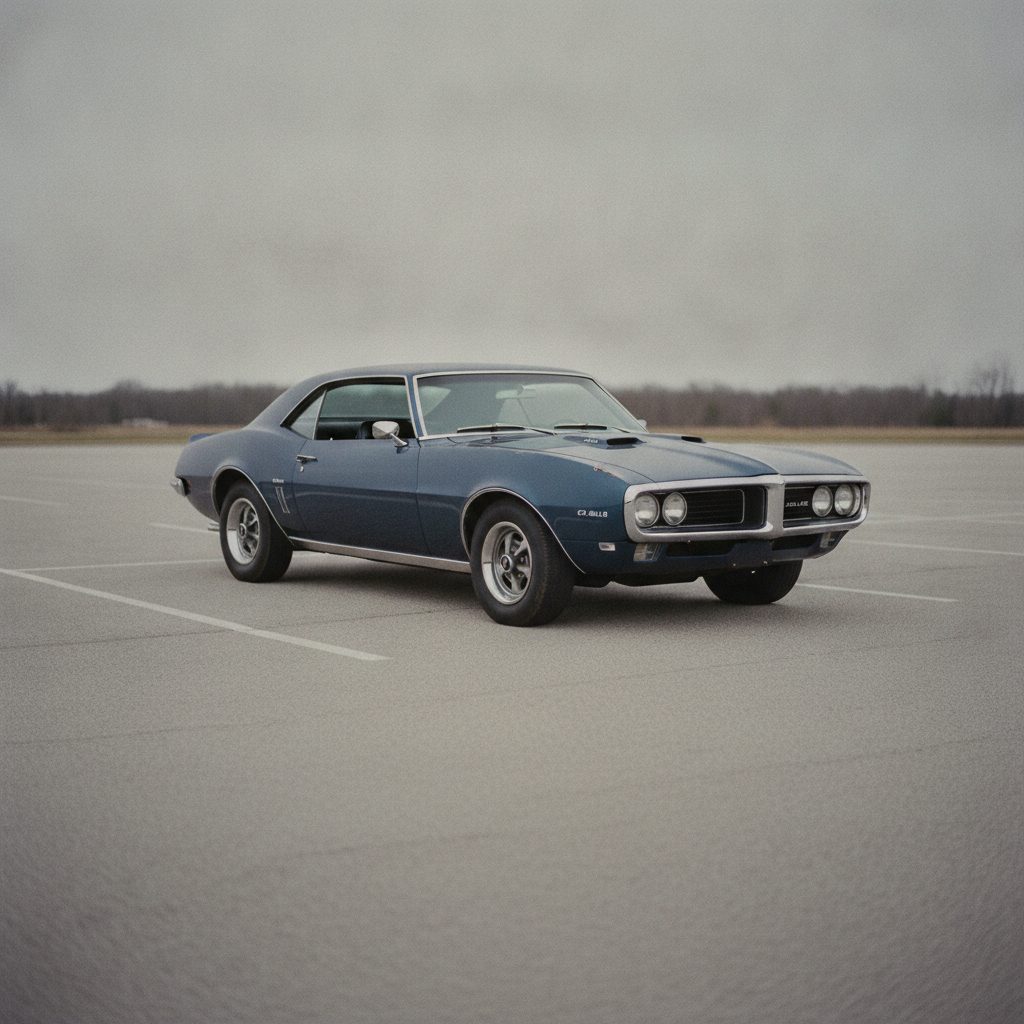
No decal in automotive history did more with less than the Trans Am's hood bird. It turned a Firebird into a cultural icon and sold a decade of Pontiacs.
Behind the graphics was real hardware: the 455 HO, the SD-455, and a chassis that could actually corner. The bird got the fame. The engineering earned it. This is the story of how a graphic that half of GM management never wanted became the most recognizable symbol in muscle car history, and why the cars underneath it deserve more credit than the sticker usually gets.
The Firebird arrived in 1967 as Pontiac's entry in the pony car war, and the Trans Am followed in 1969 as a performance and handling package wearing a borrowed racing name. Just 697 were built that first year, and they carried modest bird emblems, nothing like what was coming. Pontiac understood image better than any GM division. It had already turned the GTO into a personality as much as a car, and the Firebird studio knew a strong graphic could sell serious hardware.
The full-hood bird landed for 1973. Pontiac designer John Schinella took the small nose emblem and scaled it across the entire hood, a graphic so audacious it needed champions inside GM styling just to survive the approval process. The design drew on the thunderbird imagery that had followed the Firebird name from the beginning, rendered at a scale no production car had ever attempted. Detractors sneered and called it a screaming chicken. Pontiac people adopted the insult on the spot, and it became the most affectionate nickname in the hobby.
The bird years produced real muscle at a time when muscle was supposed to be dying. The 455 HO of 1971 and 1972 kept genuine performance alive as compression ratios tumbled across Detroit. Then came the Super Duty. The SD-455 of 1973 and 1974 was rated at 290 net horsepower and engineered like a racing program, with a reinforced block and forged internals, built by people who clearly expected owners to abuse it.
Fewer than 1,300 SD-455 cars were built across the Trans Am and Formula lines in those two years, and history has been kind to them. They are now recognized as the last true muscle car engines of the original era, arriving after everyone else had surrendered to insurance premiums and emissions hardware. Everyone remembers the decal. The Super Duty is what the historians point to.
In 1977, a black and gold Trans Am Special Edition spent two hours outrunning the law on movie screens across America, and Pontiac showrooms felt it immediately. Smokey and the Bandit turned the Trans Am from a strong seller into a phenomenon. The black and gold scheme traced back to Pontiac's 50th anniversary Limited Edition of 1976, but the movie made it the definitive Trans Am in the public imagination, complete with T-tops, gold snowflake wheels, and the bird spread across the hood.
Hollywood did not invent the appetite, it revealed it. Pontiac had spent a decade teaching buyers that the Trans Am was the serious Firebird, and when the movie put one in front of the largest audience any Pontiac ever had, the groundwork paid off. Dealers sold black and gold Special Editions as fast as the factory could ship them, and plenty of buyers who could not get one drove home in a Trans Am of another color anyway.
The sales curve tells the story better than any review could. Trans Am sales climbed through the late seventies and peaked in 1979 at 117,108 cars, the best year in the model's history and an astonishing figure for a performance car in an era when performance was supposedly dead. One movie, one paint scheme, and one oversized decal carried an entire division.
The bird got famous. The 455 under it earned the fame.
The Trans Am name came from road racing, and Pontiac's chassis engineers treated it as a contract. The second-generation car ran substantial anti-roll bars and quick steering, and by 1978 the WS6 package added wider wheels and sharper suspension tuning that made the Trans Am one of the best-handling American cars of its day. Late in the run, four-wheel disc brakes joined the WS6 package. Period road testers kept reaching for the same comparison: this was the closest thing Detroit built to a European grand tourer.
That chassis credibility matters to the legacy. The Camaro was the Firebird's platform twin, but Pontiac consistently gave its car the sharper edge and the stronger identity, and the Trans Am was the flagship proof that the division's engineers and stylists were working from the same playbook. That identity is a big part of why the Trans Am outsold and outlived so many rivals from the era.
The formula wound down as the seventies closed. Pontiac's own 400 engine made its last stand in 1979, the 1980 and 1981 cars leaned on a turbocharged 301 that promised more than it delivered, and the second generation retired after 1981, taking the full-hood bird with it. Later Firebirds wore smaller, tamer emblems, but the giant graphic belonged to one era, and Pontiac was wise enough never to force a revival.
In hindsight, the arc looks almost scripted. The bird was born just as compression fell, presided over the last of the real muscle engines, carried the brand through the malaise years on charisma alone, and left the stage exactly when its generation did. Few designs have ever been so tightly bound to one car, one decade, and one idea.
The market has sorted the era with unusual clarity. SD-455 cars sit at the top and trade like the rarities they are. The 455 HO cars follow, then the Bandit-era Special Editions, which have climbed steadily as the generation that saw the movie in theaters reached its peak collecting years. Unmodified survivors of any year keep pulling away from the modified majority, the same documentation-first pattern that is reshaping the wider muscle market, from winged Mopars to Pontiacs.
The honest guidance is directional. Buy condition and originality first, the engine second, and let the decal be the bonus, because there are far more birds than Super Duties out there and the market knows the difference even when the hoods look identical.
The full-hood bird graphic became available on the Trans Am for the 1973 model year and remained a signature option through 1981. Earlier Trans Ams, from 1969 through 1972, carried much smaller bird emblems. The oversized hood graphic is credited to Pontiac designer John Schinella, who scaled up the existing emblem.
SD stands for Super Duty, Pontiac's designation for its strongest engines. The SD-455 of 1973 and 1974 displaced 455 cubic inches, was rated at 290 net horsepower, and used a reinforced block with forged internals. Fewer than 1,300 SD-455 Trans Ams and Formulas were built across the two years.
The Bandit drove a black and gold 1977 Trans Am Special Edition with T-tops, gold snowflake wheels, and the hood bird. The color scheme originated with Pontiac's 1976 50th anniversary Limited Edition. The movie made it the most famous Trans Am configuration ever built and set off a massive sales surge.
1979 was the peak, with 117,108 Trans Ams sold, the highest total in the model's history. The surge followed Smokey and the Bandit in 1977 and made the Trans Am one of the best-selling performance cars in the world at the time, even as horsepower ratings kept falling.
The muscle world, every morning. Auctions, builds, reveals. Free.