The Beep-Beep That Runs 9s
A 1970 Road Runner built to do one thing very well. Leave, hard.
A 1970 Road Runner built to do one thing very well. Leave, hard.
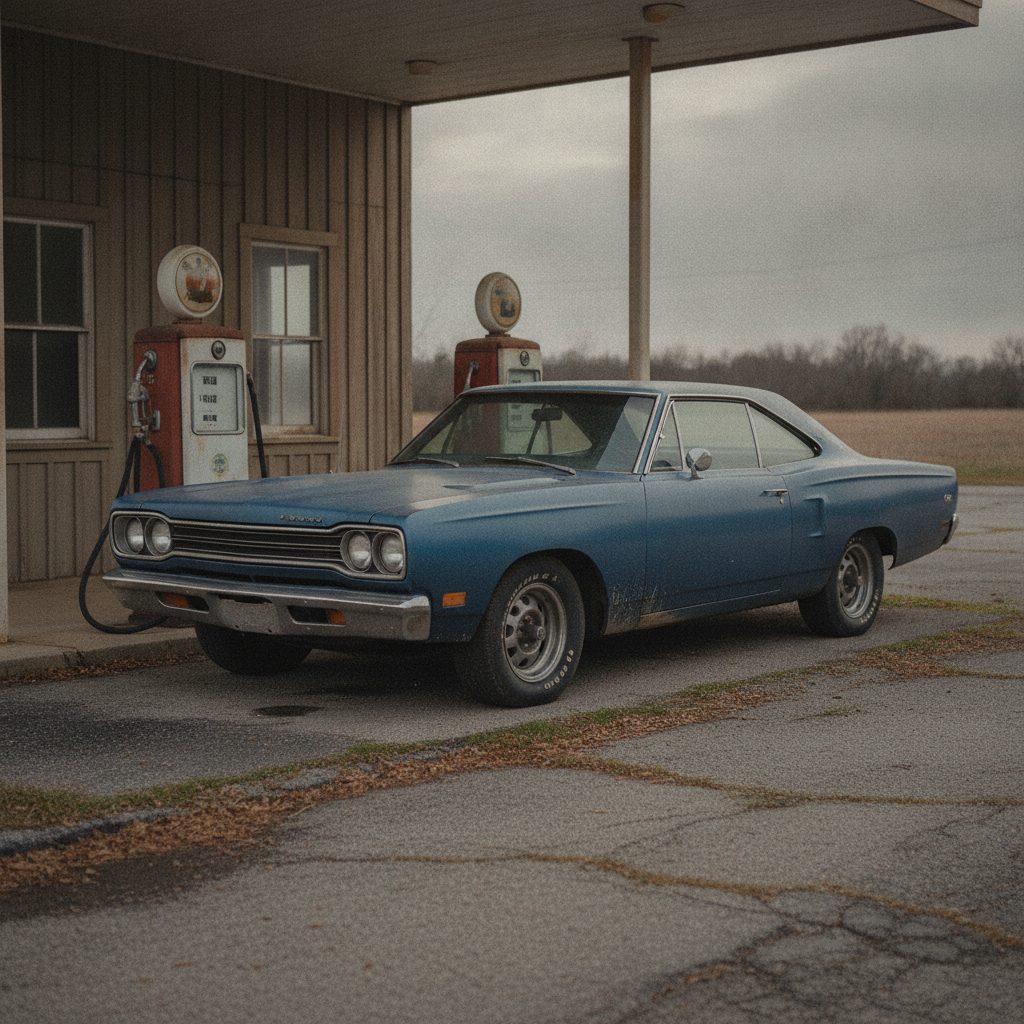
The Road Runner was always the budget bruiser: cheap, loud, and quick. This one honors that mission and dials it to eleven, running deep into the nines at the strip.
There is a right way to modify a legend, and it starts with understanding what the legend was for. The Road Runner was never a boulevard cruiser or a show queen. It was a stripped, snarling, price-of-entry weapon, and this 1970 car takes that job description literally. A stroked big-block, a built transmission, and a chassis set up to hook. It is not subtle, and it was never meant to be. It is, however, absolutely faithful to the badge on the fender.
By 1968 the muscle car had drifted upmarket, loaded with options, consoles, and price tags to match. Plymouth's answer was ruthless. Strip a midsize B-body down to a bench seat and rubber floor mats, stuff in a 335-horsepower 383 big-block, and sell the whole thing for under three grand. The company famously paid Warner Bros. a reported $50,000 to license the Road Runner cartoon, then spent real engineering money on a horn that actually said beep-beep. Every dollar the buyer saved on carpet and chrome went into hardware that mattered. It sounded like a gimmick. It became a phenomenon.
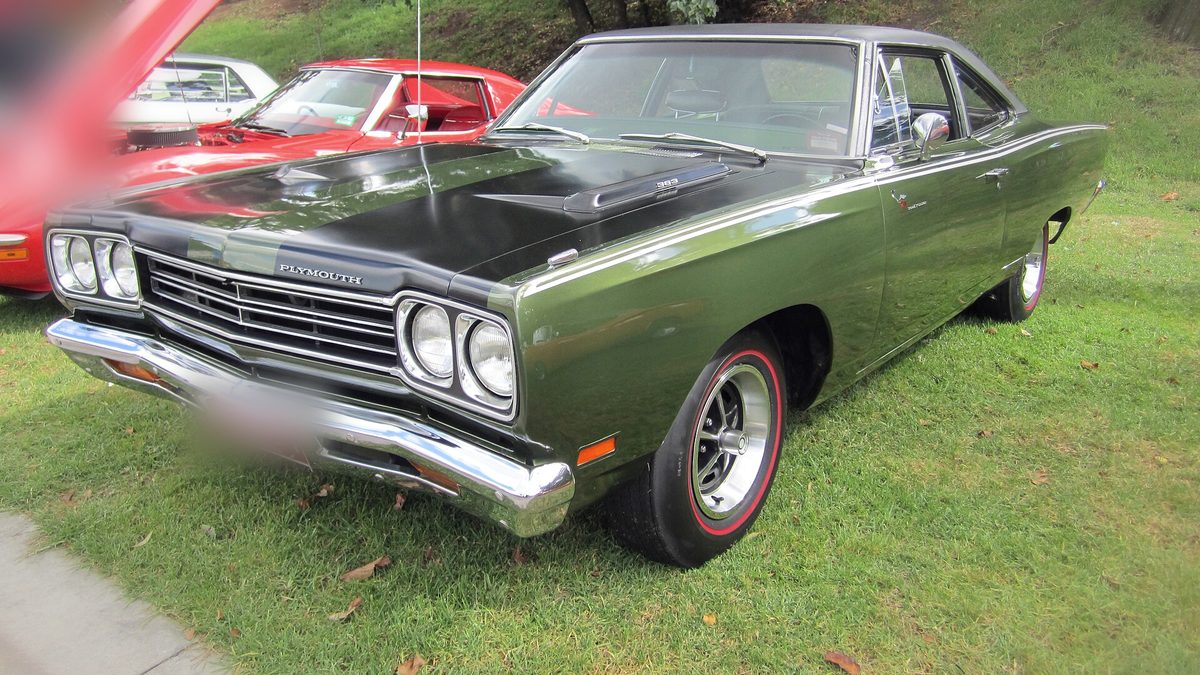
Buyers got the joke and the math at the same time. Sales blew past 40,000 cars the first year and past 80,000 in 1969, when Motor Trend named the Road Runner its Car of the Year. By 1970, the last year of the first-generation body, the formula was fully mature: standard 383, an optional 440 with six-barrel induction, and at the top of the order sheet, the 426 Hemi. The 1970 car also brought the Air Grabber scoop, a vacuum-operated trapdoor that rose out of the hood on command. Half performance part, half taunt.
A nine-second quarter mile is a serious address. It means trap speeds in the neighborhood of 140 to 150 mph, in a body shape drawn when gas cost thirty-five cents. Getting there takes power, obviously, but mostly it takes a complete system: an engine making well north of 700 horsepower, a drivetrain that can absorb the hit over and over, slicks that can use all of it, and a chassis that puts everything down without stepping sideways at half-track. Every weak link reveals itself at this level, usually expensively. And the car has to repeat the number on demand, because one heroic pass is a fluke while a nine-second average is a program.
Weight is the silent partner in the math. A B-body is not a small car, and every pound the rulebook lets you remove is power you do not have to buy. It also takes commitment to safety. At these speeds, NHRA rules put a car firmly in certified roll-cage territory, with the harnesses, window net, and driver equipment to match. Nine-second cars get built as complete packages, or they do not stay nine-second cars for long.
The heart of this build is a stroked big-block, and the stroker path is classic Mopar hot rodding. Increasing crankshaft stroke raises displacement without changing the engine's outside dimensions, and displacement remains the most honest route to torque. Chrysler's big-block architecture takes to the treatment beautifully, which is why stroker combinations dominate serious Mopar drag racing. The payoff is grunt everywhere it counts: at the hit, through the gears, and all the way out the back door.
If the big-block-versus-small-block question is new territory, our explainer on the difference covers the architecture in detail. The short version for drag racing is old wisdom: when the job is moving a full-size sixties body down a quarter mile in under ten seconds, there is still no replacement for displacement.
Cheap, loud, and violently quick. Exactly what a Road Runner should be.
Power without traction is just noise, and this car was clearly built from the rear bumper forward. A built transmission handles shock loads that would grenade a stock unit, because the launch is where nine-second passes actually happen. The sixty-foot time tells the story of the whole run: get that first second right and the rest of the track takes care of itself. Suspension geometry, shock tuning, and tire choice all serve that single moment when the car leaves. Honest chassis data and repeatable sixty-foots beat dyno bragging rights every single time.
Gearing ties the package together. Drag cars run numerically high rear gears to multiply torque at the launch, a completely different philosophy from a highway cruiser. Our rear-end gear guide walks through how a single ratio change transforms a car's entire personality, and nowhere is the effect more dramatic than at the strip.
Purists sometimes wince at a heavily modified 1970 Road Runner, and if this were a numbers-matching Hemi car they would have a point. Those are rare enough to deserve preservation. But the overwhelming majority of Road Runners were ordinary 383 cars, built cheap on purpose and bought to be used hard. Turning one into a nine-second strip car is arguably the most faithful restoration of all. It restores the mission instead of the paint.
The market has room for both camps. Documented Hemi and six-barrel cars keep climbing, while purpose-built drag cars are valued on execution and time slips. Either way, Road Runner values have firmed as collectors rediscover how central the budget-muscle idea was to the whole era. The cheap car, it turns out, was the important one, and this build is exactly the kind of argument that keeps proving it.
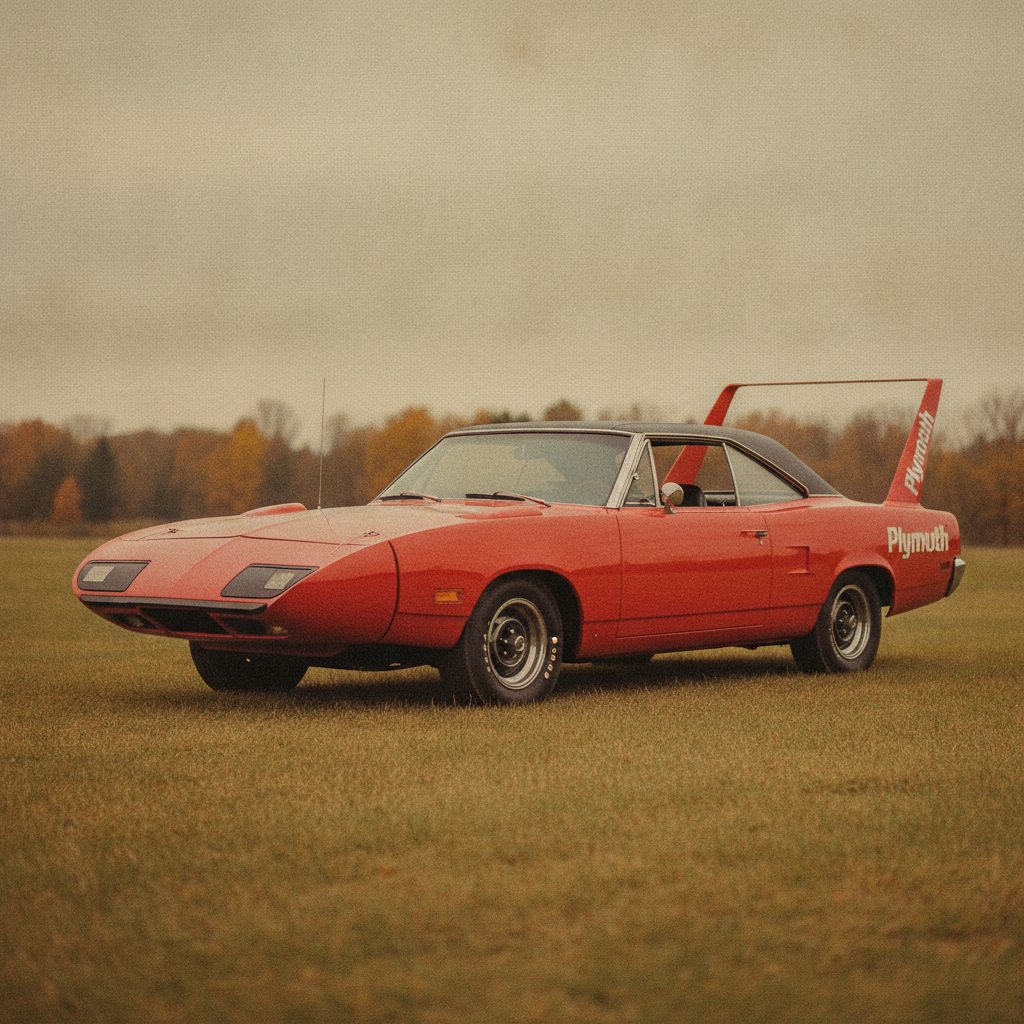
The badge even went racing at the sport's highest level. When Plymouth needed a NASCAR aero car for 1970, it built the winged Superbird on the Road Runner body, sister ship to the Dodge Charger Daytona, and put a cartoon bird on one of the fastest shapes of the century. Not bad for the cheap seats. That is the lineage this nine-second car carries every time it stages: the working man's Plymouth, still doing the one thing it was built to do. Leave, hard.
Half a century on, the formula still resonates because it never really changed. Horsepower per dollar, noise per pound, and zero apologies. Modern muscle eventually rediscovered that recipe, but Plymouth wrote it down first, and cars like this one keep the original text alive.
The standard engine was Chrysler's 383 cubic inch big-block V8, rated at 335 horsepower. Buyers could step up to the 440 Six Barrel with three two-barrel carburetors, or to the top-dog 426 Hemi. All three engines backed the car's budget muscle mission with genuine performance.
At launch in 1968, a base Road Runner stickered at roughly $2,900, deliberately under the three-thousand-dollar mark. That price was the entire point of the car: Plymouth stripped out comfort features and spent the money on drivetrain, giving working buyers genuine big-block performance at an economy-car price.
A nine-second pass typically means crossing the finish line around 140 to 150 mph, covering the quarter mile quicker than nearly every modern production supercar. At that performance level, NHRA rules require a certified roll cage and safety equipment, which is why true nine-second street cars remain rare.
Yes. Plymouth paid Warner Bros. a reported $50,000 to use the Road Runner name and cartoon likeness, then developed a horn tuned to mimic the character's beep-beep. The gimmick worked: the car became one of the best-selling muscle cars of its era and a Motor Trend Car of the Year winner.
The muscle world, every morning. Auctions, builds, reveals. Free.