How to Tell a Real Stage 1 From a Story
Stage 1 was an option box, not a model, which is exactly why so many cars claim it.
Stage 1 was an option box, not a model, which is exactly why so many cars claim it.
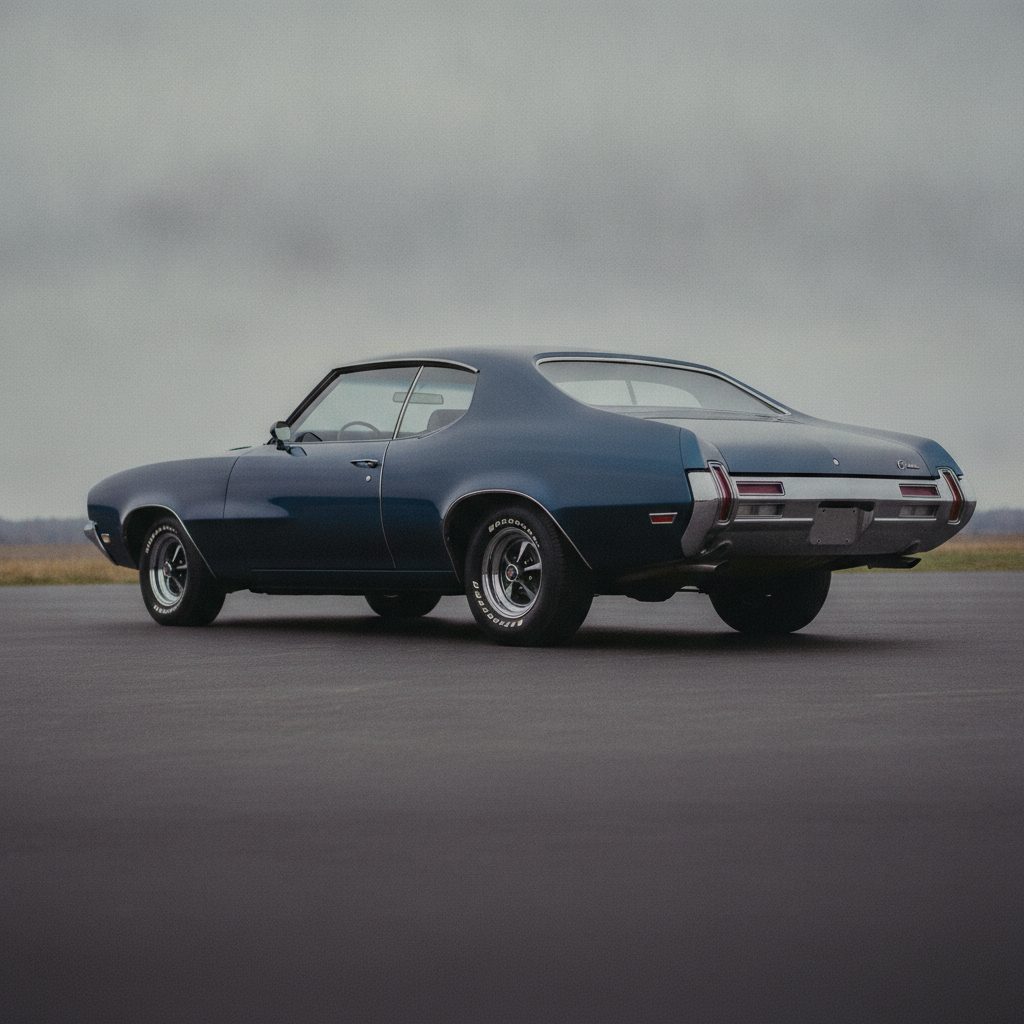
Start with the body code, because it rules out more cars than anything else. A 1970 Stage 1 had to begin life as a GS 455, which means a VIN starting 44637 for the hardtop or 44667 for the convertible, with the year and the Flint assembly code following. If the VIN says Skylark, the conversation is over no matter what is bolted to the engine.
Here is the part that catches people. The VIN confirms a GS 455. It does not confirm Stage 1, because Stage 1 was an option code rather than a separate model, and option codes do not live in the VIN. Buick built roughly 2,865 Stage 1 coupes and 232 Stage 1 convertibles for 1970, so the real ones are out there in reasonable numbers. So are the tribute cars wearing decals.
The incentive is obvious. Stage 1 sits at the top of the Buick performance market, the premium over a base GS 455 is wide, and the visible differences are subtle enough that chrome valve covers and a pair of badges can carry a story a long way. None of this makes tribute cars villains, and plenty are honest, well-built drivers. The trouble starts when tribute hardware meets Stage 1 pricing, and the only defense is knowing exactly what the option box added. It is the same dynamic that follows every muscle car where a small badge difference carries a large price gap, and Buick's version of that gap is one of the widest in the hobby.
On paper, Buick rated the 1970 Stage 1 at 360 horsepower, a barely visible bump over the standard GS 455, and almost nobody in the business believed that number then or believes it now. The torque figure was the honest one: 510 lb-ft at just 2,800 rpm, the kind of low-rpm shove that made these quiet-looking hardtops brutal off the line. Period testing backed it up, with Motor Trend running a showroom-stock Stage 1 through the quarter mile in 13.38 seconds at 105.5 mph, numbers that embarrassed cars with far louder reputations.
The same engine powered the spoilered, Saturn Yellow GSX, which got the magazine covers and the poster sales. Buick built just 678 GSX cars for 1970, and 479 of them carried the Stage 1 engine. The plain GS 455 Stage 1 hardtop was the sleeper version of the same punch, which is exactly why buyers hunt it, and exactly why sellers are tempted to round up.
The option was a genuine hardware package, which is good news for a buyer with a flashlight. Stage 1 heads used larger valves, 2.125 inches on the intake side against the standard 2.00, and 1.75 on the exhaust against 1.625. The package added dual valve springs, a higher-lift camshaft, a rejetted carburetor, a recurved distributor, a high-volume fuel pump, a larger oil pickup, a seven-blade heavy-duty fan, and a posi rear. Stage 1 cars also wore chrome valve covers where lesser Buicks made do with paint.
Every line of that list is something a careful buyer can check, and that is the point. A real Stage 1 is not a decal package, it is a set of measurable parts. Any single piece can be added to any Buick after the fact, so hardware alone never proves a car. Missing hardware, on the other hand, disproves one very quickly, and a seller who discourages inspection has answered the question already.
The VIN tells you it is a GS 455. Only the paperwork and the hardware tell you it is a Stage 1.
Cars ordered with the automatic got a specific TH400 carrying the transmission code BB. An original transmission also carries a serial number that reads as a 4 followed by the last eight digits of the VIN, which is a fast way to confirm the drivetrain has stayed together. Ten minutes under the car with a flashlight and a notepad settles questions that an hour of seller conversation never will, and the seven-blade fan, the fuel pump, and the valve covers should all present exactly as the package describes.
Then go looking for paper. The Production Order Body sheet usually hides on top of the fuel tank under the sound deadener, or in the rear seat springs, and the Flint build sheet often turns up under the dash or against the driver side pillar. Either one settles the argument in a way that a fresh set of stripes never will. The Stage 1 Registry keeps the definitive identification notes on all of this and is worth reading in full before you hand anyone a deposit.
The market splits cleanly along the documentation line. A verified Stage 1 with its paperwork commands a wide premium over an equivalent base GS 455, the convertibles carry a rarity premium on top thanks to that 232-car total, and a tribute trades at nice-driver Buick money no matter how sweetly it runs. The gap is rational. The whole muscle car market has spent two decades paying up for cars that do not have to be explained, and Buicks are no exception. Condition still matters, but between two otherwise equal cars, the folder of paper wins every time.
The brand tailwind is real too. Buick performance went from overlooked to seriously collected, first through the 1970 big-block cars and later through the turbocharged Regals that ended with the GNX, a car that resets its own market whenever a delivery-mile example surfaces. Collectors who arrived through the turbo cars keep discovering that the division's big-block era was every bit as serious, and demand for the honest, documented cars is not going anywhere.
The discipline is simple. If the VIN does not start 44637 or 44667, it is not a GS 455, full stop. If the seller claims Stage 1 but cannot show paperwork or correct hardware, price it as a base car and let the story become a free bonus if it later proves out. If a deal cannot survive a build sheet hunt or a valve measurement, it was never a deal. Patience is the cheapest tool in the box, because another GS always comes along, and a seller holding a real Stage 1 knows exactly what proof looks like. The good cars can prove themselves, and the good sellers will let them try.
Buick built roughly 2,865 Stage 1 coupes and 232 Stage 1 convertibles for the 1970 model year. That is enough that genuine cars turn up for sale regularly, and few enough that the convertibles are serious rarities. Documented examples are a smaller subset of even those totals.
Start with a VIN beginning 44637 for the hardtop or 44667 for the convertible, then confirm the hardware: larger-valve Stage 1 heads, the BB-code TH400 on automatic cars, and a transmission serial matching the last eight digits of the VIN. Finish with the body sheet or the Flint build sheet.
Buick advertised 360 horsepower for the 1970 Stage 1, along with 510 lb-ft of torque at 2,800 rpm. The horsepower rating was widely considered conservative even when the car was new, and period testing, including a 13.38-second quarter mile by Motor Trend, suggested the real output was higher.
Directionally, documented Stage 1 cars have been solid performers as the market pays growing premiums for verified rarity, and the 232 convertibles sit at the top of the pile. Base GS 455s and tribute cars track the broader muscle market instead. Buy documentation first and enjoy the car regardless.
The muscle world, every morning. Auctions, builds, reveals. Free.