The 1,000-HP Street Camaro
A 632 big-block, a street registration, and a driver who actually uses it. This is the four-figure build done right.
A 632 big-block, a street registration, and a driver who actually uses it. This is the four-figure build done right.
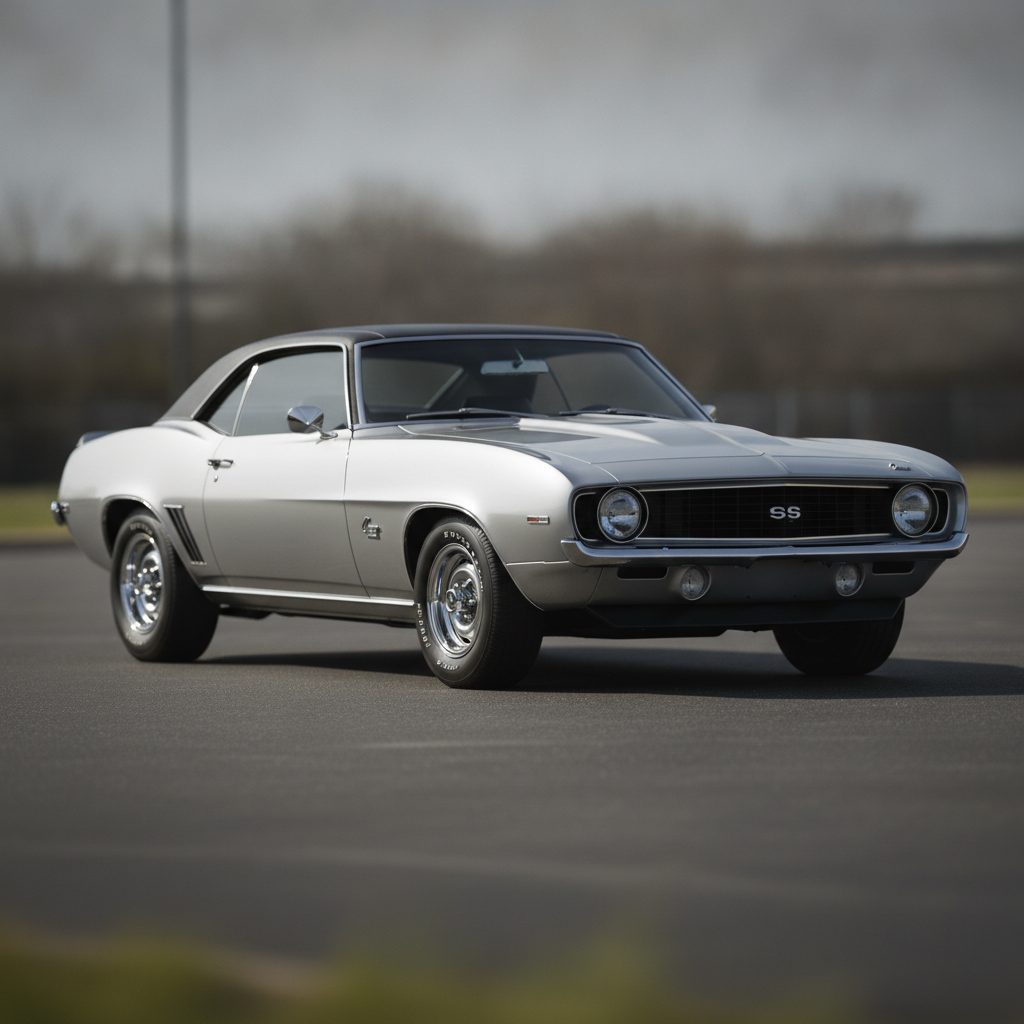
Four-digit horsepower usually means a trailer queen. Not this one. A 632-cubic-inch big-block makes over a thousand horsepower, and the car still has plates, a working interior, and a tank of pump gas.
The discipline is in the details: a drivetrain built to survive the power, a chassis that can use it, and brakes that can stop it. Power is easy. Making it livable is the hard part. That sentence is the whole thesis of this build, and it is why this silver Camaro earned its spot on our Best Builds list ahead of cars with wilder paint and bigger dyno graphs. Anyone can buy horsepower in 2026. Finishing the other ninety percent of the car is what separates a machine from a math problem.
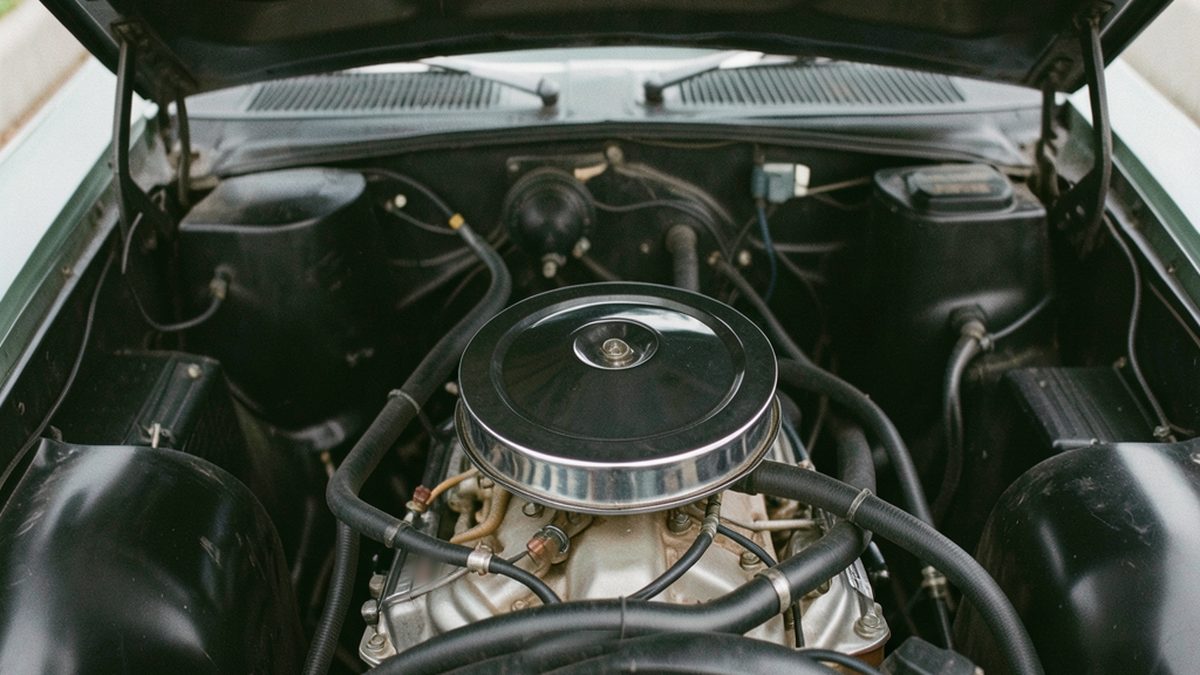
A 632-cubic-inch big block is not exotic anymore. Chevrolet Performance itself sells the ZZ632, a tall-deck crate engine rated at 1,004 horsepower on 93 octane pump fuel, naturally aspirated, with a warranty card in the box. That factory offering settled an argument the aftermarket had already won: with enough displacement, modern cylinder heads, and electronic fuel injection, four-digit power no longer requires race gas, a blower, or a tolerance for constant rebuilds. Displacement is the honest path. There is no boost lag, no heat-soaked tune, no nitrous bottle to refill. Just 632 cubic inches doing what cubic inches have always done, multiplied by fifty years of cylinder-head science.
The classic rule of thumb still applies, and we broke it down in our big block versus small block explainer: the big block trades weight and packaging for torque you cannot fake. In a street car making this kind of power, that trade is the right one. A thousand naturally aspirated horsepower from a small engine means a violent cam and a powerband that starts where the speed limit ends. From 632 inches, it means a fat, forgiving torque curve that pulls from idle, which is exactly what makes the car drivable at all.
Street registration is more than a legal nicety. It is an engineering constraint that shapes every line of the build sheet. The car needs a charging system that keeps up, a cooling package that survives traffic on a July afternoon, an exhaust with mufflers that keep the police bored, and throttle calibration gentle enough for a parking lot. Pump-gas compression belongs to the same discipline: the engine has to accept whatever the corner station sells, because a street car that requires a drum of race fuel in the trunk is a trailer queen with extra steps.
The working interior is the detail that gives the build away as serious. Gauges you can read, seats you can sit in for two hours, belts that meet this century's expectations, and a cabin quiet enough to hear a passenger. None of it adds a single horsepower, which is precisely why so many big-number builds skip it, and why this one did not.
Behind an engine like this, every driveline component is a decision about survival. The transmission has to be built for the torque, the driveshaft becomes a safety item with a loop around it, and the rear axle needs the case, the spline count, and the gears to take a four-digit hit without sending parts through the floor. Gearing is its own science at this power level: deep enough to launch without turning the tires to smoke, tall enough to cruise at sane rpm. Our rear-end gear guide covers the math, and the math matters twice as much when the engine can overpower the tires in any gear it chooses.
A thousand horsepower is not the achievement. Driving it home is.
No factory Camaro structure was ever asked to manage this kind of output, so builds at this level reinforce everything: stitched and boxed structure, modern suspension geometry, and subframe connectors tying the car together. The brake conversation is the least glamorous and the most important. An engine this strong can put the car into triple-digit speeds in a few seconds of indiscretion, and factory-era hardware was marginal at half that pace. Big discs, a properly matched master cylinder, and real pads are not upgrades on a car like this. They are the entry fee.
Tires carry the whole argument. A thousand horsepower through inadequate rubber is a party trick that ends in a ditch, so the widest tire the body allows, on wheels sized for modern compounds, is a structural decision rather than a cosmetic one. Traction defines how much of the engine's effort ever reaches the pavement, and the difference between a scary car and a fast one is almost always measured at the contact patch.
The show field is full of four-digit dyno sheets bolted to cars that never see a public road. There is craft in those builds, but there is no proof. A street-driven thousand-horsepower car is a different achievement entirely, because every system has been tested by reality: heat, traffic, rain grooves, bad fuel, cold starts. The Camaro has always been the honest working car of the muscle world, and this build honors that identity. It is not a sculpture of speed. It is speed, registered and insured.
There is a budget lesson hiding under the silver paint, too. Big horsepower is available at almost every spend level now; our $400 junkyard 5.3 dyno test proved cheap power is real. What separates this car is not the number. It is the completeness: the thousandth detail finished to the same standard as the first. Builds fail at the edges, in wiring and cooling and brake proportioning, and this one has no unfinished edges.
The market has learned to price finished, sorted, genuinely street-capable builds at a premium over the sum of their receipts, because the second owner is buying thousands of hours of debugging they will never have to repeat. Documented professional fabrication, dyno sheets, and road miles that prove reliability all add value rather than subtract it. Muscle-era Camaros with modern drivetrains sit at the center of that trend, and the strongest money follows the cars that can demonstrate, not merely claim, that all the horsepower actually works in the real world. A thousand on the dyno impresses a crowd. A thousand that idles through a drive-through impresses a buyer.
Chevrolet Performance rates its ZZ632 crate engine at 1,004 horsepower and 876 lb-ft of torque, naturally aspirated on 93 octane pump gas. Custom 632-inch builds span a wide range depending on heads, compression, and induction, with race versions going higher and street builds typically landing near four-digit territory.
Yes. Street legality depends on meeting your state's registration, safety, and emissions requirements for the vehicle's model year, not on any horsepower limit. Classic-bodied cars in many states face simpler emissions rules, which is why so many extreme builds start with vintage muscle. Insurance and tires are the practical hurdles.
At this level everything is purpose-built: heavily upgraded TH400 or 4L80E automatics with billet internals are the common choices, along with torque-rated manual setups built around serious clutch packages. The converter or clutch, driveshaft, and axles must be matched as a system, because the weakest link decides what breaks first.
It can, with the right combination. Modern cylinder heads, conservative compression ratios, and electronic engine management let large-displacement big blocks like the 632 make four-digit power on 93 octane. The displacement does the work instead of extreme cylinder pressure, which is what keeps the engine safe on street fuel.
The muscle world, every morning. Auctions, builds, reveals. Free.