What W-30 Really Meant
Oldsmobile built one of the era's most respected big-blocks. And barely told anyone.
Oldsmobile built one of the era's most respected big-blocks. And barely told anyone.
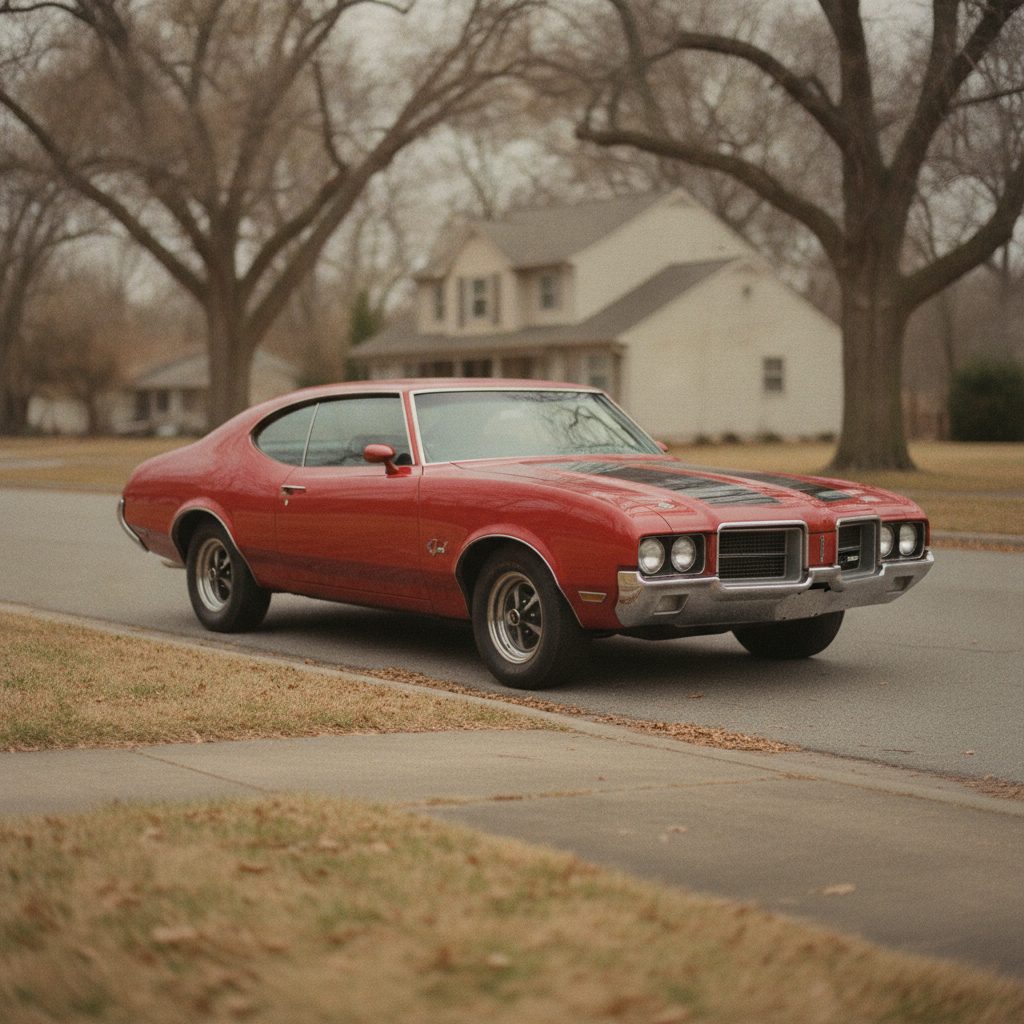
Oldsmobile did not shout the way Pontiac and Dodge did, and the 442 is better for it. The W-30 package quietly made it one of the most respected big-blocks of the muscle era.
Fiberglass ram-air hood, a hotter cam, and real engineering underneath a gentleman's exterior. It was fast without the theater, and collectors have finally caught on. Understanding what W-30 actually meant, and just as importantly what it did not, is the key to understanding why the quietest of GM's divisions built one of the muscle era's most credible cars.
The 442 was born in 1964 as an option package on the Cutlass, and the name was a specification: four-barrel carburetor, four-speed manual, dual exhaust. The hardware grew out of a police package, which tells you something about the division's priorities. It was Oldsmobile's measured answer to the Pontiac GTO, which had invented the midsize muscle formula one division over just months earlier. When automatic transmissions joined the order sheet, the definition quietly shifted to a 400 cubic inch engine, four-barrel carburetor, and dual exhaust, and Oldsmobile never lost a minute of sleep over the semantics.
By 1968 the 442 had earned separate-model status, which it held through 1971, the heart of the muscle era. Where Pontiac sold rebellion and Plymouth sold cartoons, Oldsmobile sold competence to grown-ups who still wanted to win the light-to-light sprint. The 442's reputation as the best-built, best-mannered car in the segment dates from exactly this period, and it was earned rather than advertised. It also aged into the sleeper of the segment, the car the smart money circled while everyone else bid on louder badges.
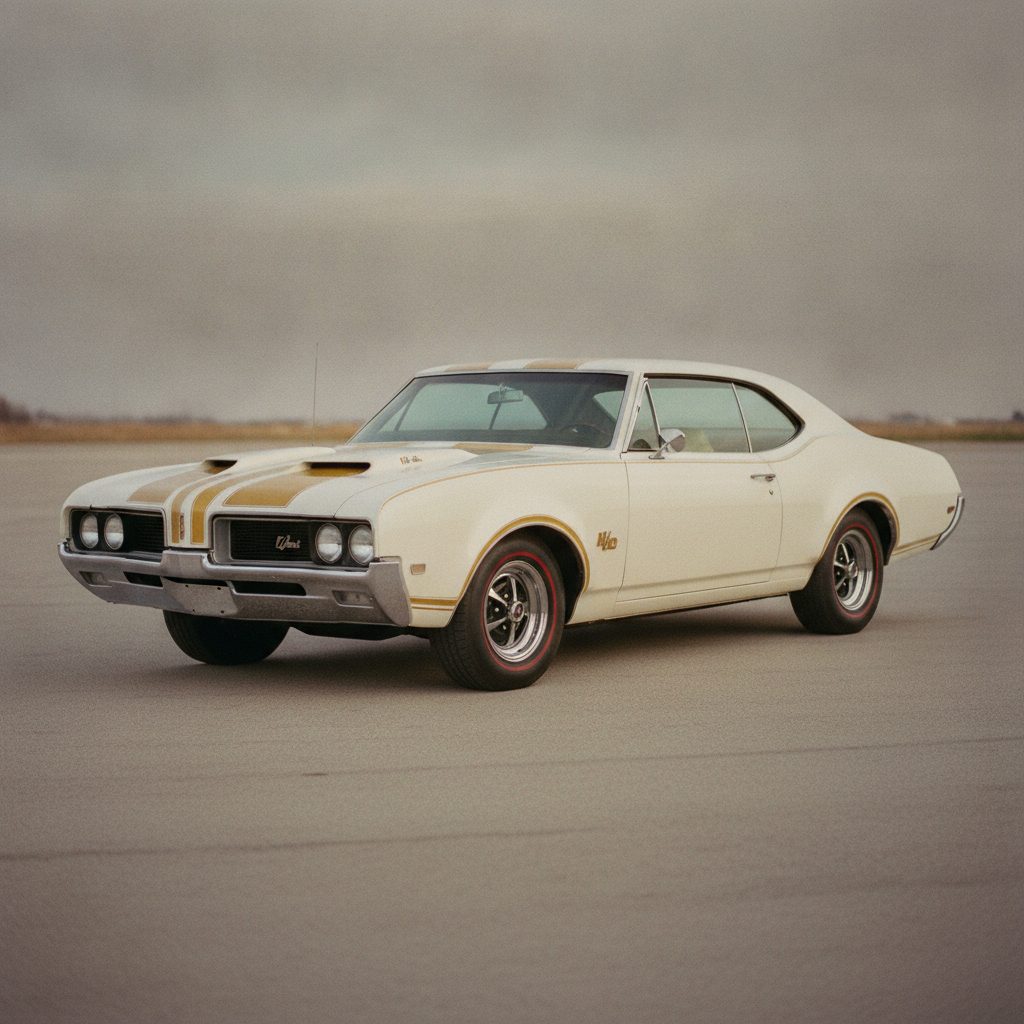
W-30 was an internal option code that grew into a legend. It first appeared in 1966 as a forced-air induction package: ducting that fed cold air from the front bumper openings to the carburetion, a hotter camshaft, and the battery relocated to the trunk to clear the ductwork and shift a little weight rearward. Only a few dozen cars were so equipped that first year, and many of them went straight into drag racing, which was exactly the point.
The letter W went on to mark Oldsmobile's whole catalog of performance hardware, the W-machines, but W-30 stayed the flagship code. On a 442 it meant the engineers had gone through the car with intent: induction, camshaft timing, exhaust flow, and cooling all received specific attention. It was a blueprint option, not a decal package, and the people who knew, knew.
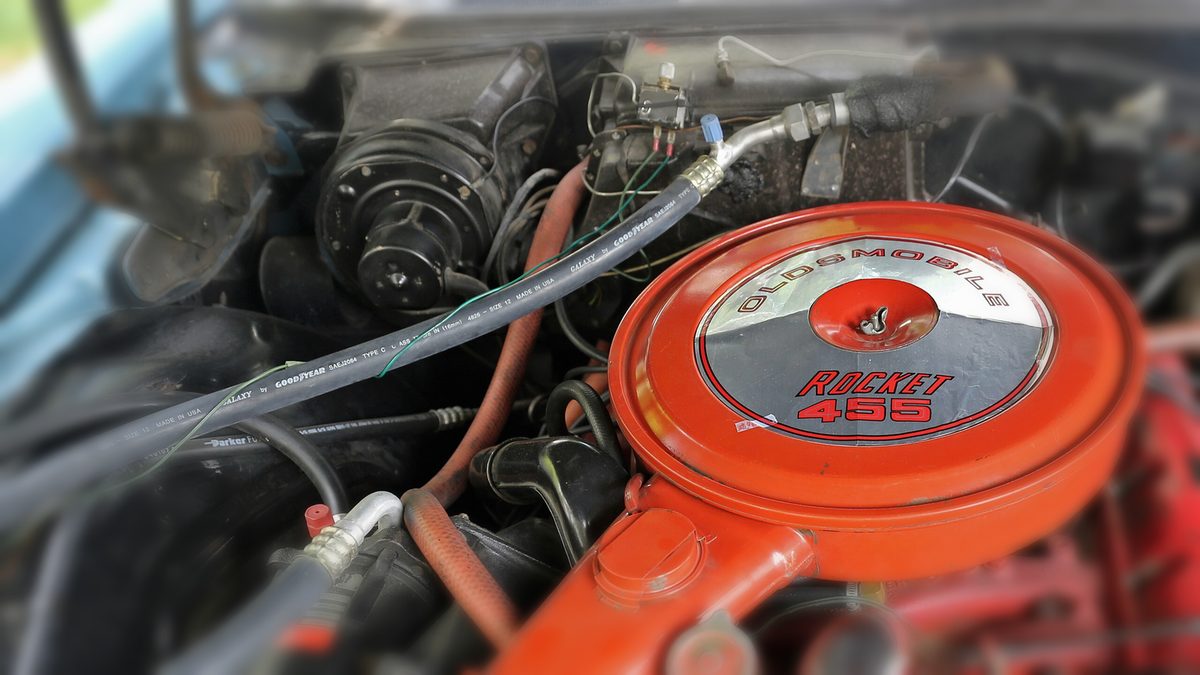
For 1970, General Motors lifted its displacement cap on midsize cars, and Oldsmobile was ready. Every 442 received the 455 that year, and the W-30 version stands as the package's high-water mark. The rating read 370 horsepower, a suspiciously modest five more than the standard engine, along with a monstrous 500 lb-ft of torque. Nobody who drove one believed the five-horsepower gap. The number was diplomacy, aimed at insurance adjusters and corporate minders at the same time.
The parts told the truth. W-30 cars carried an aluminum intake manifold, a hotter cam, low-restriction exhaust, and the fiberglass W-25 hood with functional ram-air scoops feeding a sealed air cleaner. Red plastic inner fender liners saved a few pounds and became the package's secret handshake, the detail insiders checked before making a bet. Roughly 3,100 W-30 cars were built for 1970, which is genuine exclusivity by GM A-body standards. Period road tests put strong examples in the high 13s to low 14s in the quarter mile, right in the thick of the era's fastest.
It never shouted. It never had to.
While Plymouth drew cartoon birds and Pontiac hired a television catchphrase, Oldsmobile invented Dr. Oldsmobile, a lab-coated mad scientist who fronted the W-machine lineup in period advertising. The campaign fit the brand perfectly: wry, technical, and aimed at buyers who read the specification panel before the headline. The doctor's laboratory produced the high-winding W-31 small-block Cutlass and other W-code machinery, but W-30 always topped the chart.
The company the 442 kept makes the case for it. The 1970 GM A-body class was the strongest single field the corporation ever put on one platform, with the Chevelle LS6 454 and the Buick GSX Stage 1 as siblings and rivals. The Chevelle owned the headline horsepower number and the Buick owned the torque legend, but the Oldsmobile was the one engineers praised as a complete car: brakes, suspension, assembly quality, and road manners all pulling in the same direction.
The W-30's collectibility problem is the same one that haunts every option-package muscle car: cloning is easy and documentation is everything. A standard 442, or a Cutlass dressed as one, can wear a reproduction hood, decals, and fender liners by the end of a weekend. Real W-30s are verified through build sheets, original paperwork, and correct date-coded components, starting with the aluminum intake and the right heads and carburetor for the year.
The good news is that the knowledge base runs deep. Casting numbers, date codes, and correct finishes for every year are thoroughly documented by the Oldsmobile community, and experienced judges can read a car in minutes. Walk away from any seller who discourages a close inspection, and treat a fresh restoration with no history as a question, not an answer.
Buy the documents before you buy the car. A W-30 with its paper trail intact carries a premium the visual clones never touch, and that gap keeps widening as the market gets more forensic about verification. If the seller's story leans on decals and confidence rather than paperwork, price the car as a tribute and enjoy it as one.
Directionally, the W-30 has spent the last decade being rediscovered. For years it traded at a discount to comparable Chevelles and Mopars, a hangover from Oldsmobile's understated image and its early exit from the performance stage. That discount has been closing as collectors chase engineering credibility and documented rarity rather than sheer volume of reputation. Interest in the Oldsmobile 442 has never been stronger, and the best W-30 cars now headline major auctions instead of supporting them.
None of that requires hype, which would be off-brand anyway. The W-30 story has always rewarded the patient: the buyers who read the build sheet, the owners who kept the paperwork, and the restorers who chased the correct castings. The market finally reads the spec panel the way Dr. Oldsmobile always intended.
W-30 was Oldsmobile's factory performance option code, first offered in 1966. It packaged forced-air induction, a hotter camshaft, and supporting hardware on the 442. By 1970 it meant the 455 engine with an aluminum intake, fiberglass ram-air hood, low-restriction exhaust, and a conservative 370 horsepower rating.
When the package debuted in 1964, 442 meant four-barrel carburetor, four-speed manual transmission, and dual exhaust. Once automatic transmissions became available, Oldsmobile revised the definition to a 400 cubic inch engine, four-barrel carburetor, and dual exhaust. The name stayed even as the specification underneath it kept evolving.
Oldsmobile built roughly 3,100 W-30 cars for the 1970 model year, a small fraction of total 442 production. Survivors with original documentation are far scarcer. Because the package is easy to clone visually, verified examples with build sheets and correct date-coded parts carry a substantial premium over lookalikes.
The 1970 W-30 455 was factory rated at 370 horsepower and 500 lb-ft of torque, just five horsepower above the standard 442 engine. The rating was widely considered conservative, kept low with insurance companies in mind. The aluminum intake, hotter cam, and ram-air induction were worth more than the paper suggested.
The muscle world, every morning. Auctions, builds, reveals. Free.