Project Go-Mango: A Street-Built 440
Three winters, a two-car garage, and no crew. Ray Delgado turned a rusted shell into one of the cleanest street 440s we have seen.
Three winters, a two-car garage, and no crew. Ray Delgado turned a rusted shell into one of the cleanest street 440s we have seen.
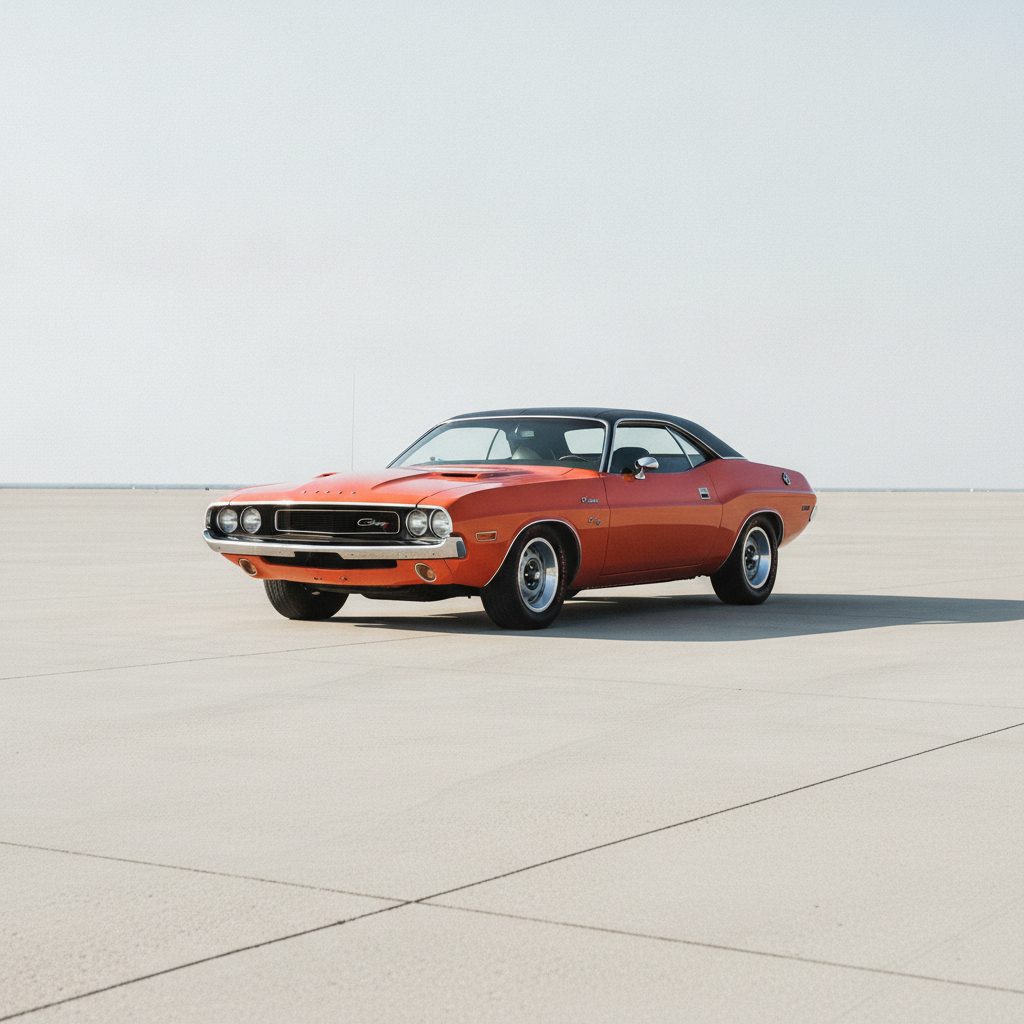
Some builds happen in shops with lifts and crews. This one happened in a two-car garage, one winter at a time, by a guy with a factory service manual and a lot of patience. It shows, in the best way.
Project Go-Mango is the kind of car this magazine exists for. Ray Delgado started with a rusted shell that most shops would have written off as a parts car, and over three winters he turned it into one of the cleanest street-built 440 Mopars we have seen. No crew, no lift, no checkbook shortcuts. Just a garage, a manual, and a stubborn refusal to quit. That is the whole story, and it is a better one than most six-figure builds can tell.
The name is not just a clever project title. Go Mango was a real factory color, part of the High Impact palette Chrysler unleashed on showrooms in 1969 and 1970. These were paints with attitude and names to match: Plum Crazy, Sublime, Top Banana, Panther Pink, Hemi Orange. Go Mango, a deep burnt orange, landed on Dodge order sheets for 1970 and immediately became one of the defining shades of the muscle car era. It cost a few extra dollars on the order form, and it turned every car that wore it into a rolling advertisement for the whole Scat Pack attitude.
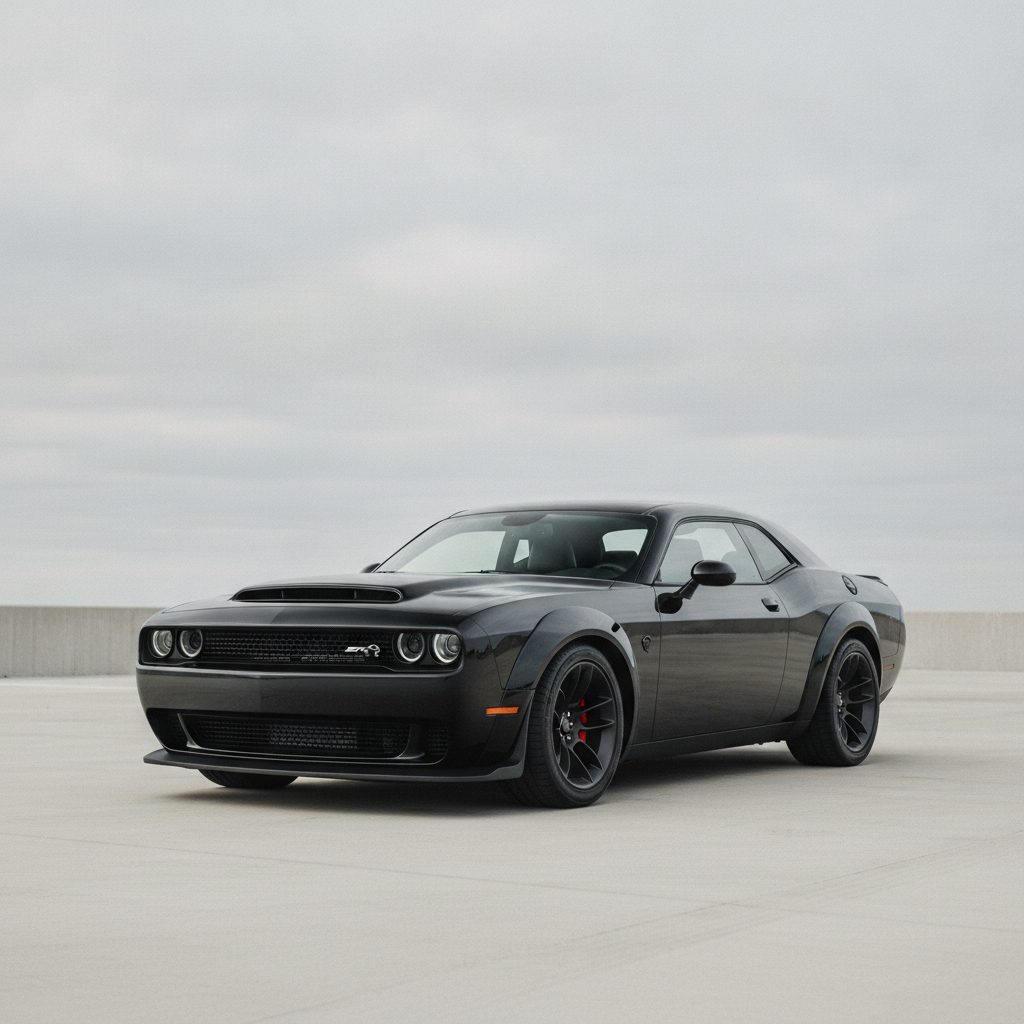
Dodge never forgot it, either. When the modern muscle revival hit its stride, the company brought Go Mango back for 2016, and the color sold well enough to stay in the catalog for years afterward. Half a century after it first appeared, a vivid orange Mopar is still one of the most recognizable sights in the hobby, which is exactly why this build wears it.
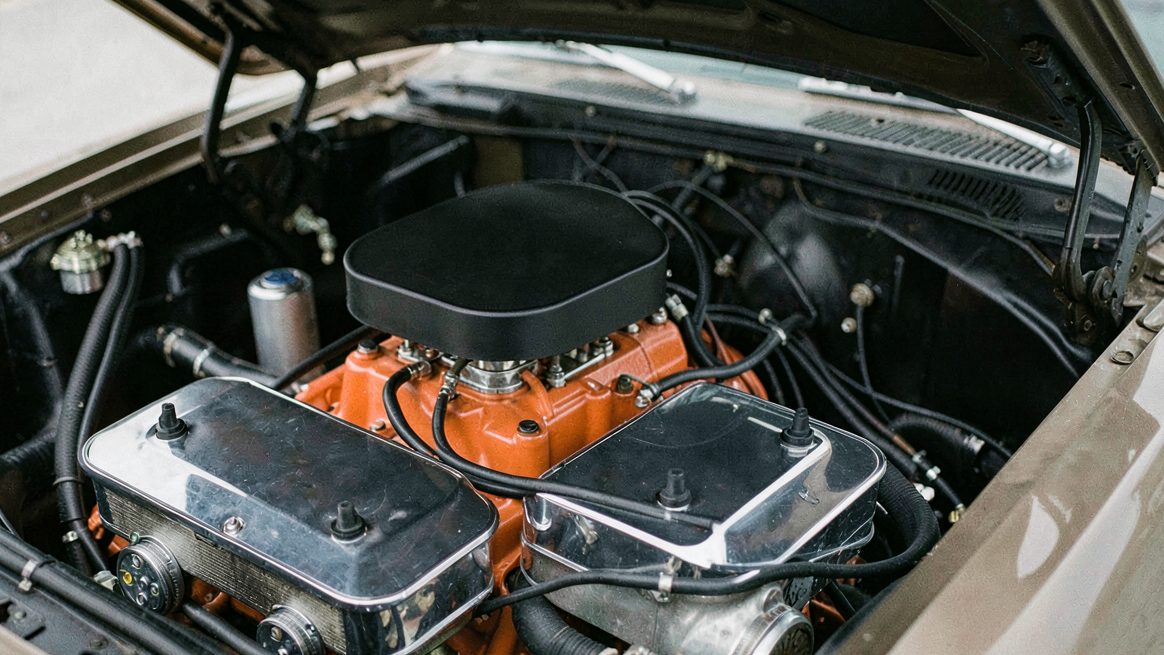
The engine choice is pure Mopar logic. The 440 is Chrysler's RB-series big block, and with the Six Pack setup, three Holley two-barrel carburetors on a common intake, it was factory rated at 390 horsepower and 490 lb-ft of torque. The combination debuted in mid-1969 on the stripped-down A12 Super Bee and Road Runner, cars built for exactly one job, and it earned its reputation overnight: near-Hemi acceleration on the street for a fraction of the Hemi's price, with a fat torque curve that made it arguably the better real-world engine.
It is also friendlier to live with than the reputation suggests. Around town the engine runs on the center carburetor alone, docile as a station wagon. Open the throttle and the outboard carbs snap in, all six barrels feeding the big block at once. If you want the deeper mechanical background, our big block vs small block explainer covers why the 440's architecture matters, but the short version is simple: nothing sounds, or pulls, quite like a big-inch Mopar wearing three carburetors.
The rust came first, because it always does. A shell that rough demands floors, quarter panels, and patience measured in months, and Delgado did that work at home with the factory service manual open on the bench. That is the part most people underestimate. Anyone can order parts. Fitting them straight, gapping panels, and getting a fifty-year-old unibody to sit right is the real education, and it is why home-built cars this clean are so rare.
The drivetrain follows the same philosophy. The 440 wears its six-barrel induction and makes a streetable 505 horsepower. Behind it sits a four-speed manual, the honest choice, the transmission that makes the driver do the work and rewards him for doing it well. Nothing on the car is over-built or over-chromed. Every decision serves one goal: a car that gets driven, not displayed.
No shop, no crew, no shortcuts. Just three winters and a manual.
Streetable is the key word, and it is doing real work in that sentence. Plenty of engines will make 505 horsepower on a dyno sheet. Far fewer will idle in traffic, start hot on a July afternoon, and cruise for two hours without complaint. That balance is the hardest part of any carbureted performance build, and it is where this car shines. Three carburetors in 2026 is a statement of intent. Our carb vs EFI guide lays out both sides of that debate honestly, but on a car like this the six-barrel is the soul of the thing, and getting it dialed is part of the accomplishment.
The rest of the numbers are honest muscle car numbers. At 3,650 pounds, the car runs to sixty in 4.4 seconds, quick enough to embarrass plenty of modern machinery at a stoplight. More important, those are numbers that actually get used. It is a driver, and Ray drives it. In a hobby drifting toward sealed garages and auction paddocks, that might be the most impressive spec on the sheet.
This is the heart of the hobby: not the auction cars, but the ones built by hand at home. Televised sales and seven-figure hammer prices have convinced a lot of people that the door has closed on the ordinary enthusiast, that classic Mopar muscle is now a rich man's game. A car like this says otherwise. The skills are learnable, reproduction sheet metal and driveline parts for big-block Mopars have never been more available, and a rough shell is still the cheapest ticket into the game.
It matters for the market, too. Documented, well-executed amateur builds have become a respected category of their own, judged on workmanship rather than provenance. Cars like this one prove the ceiling for a home garage is a lot higher than the internet thinks. Go-Mango is our Build of the Month because it proves you still can. Not with unlimited money or a shop full of specialists, but with three winters, a factory manual, and the will to keep walking back out to a cold garage in January.
The E-body Challenger arrived for 1970 as Dodge's late but heavily armed entry in the pony car war, offering the widest engine range in the class, from the slant six all the way up to the 426 Hemi. The 440 cars sat in the sweet spot: nearly Hemi performance at a price a working buyer could actually reach. That same value logic is exactly what this build recreates half a century later, right down to the paint. For the full model history, market coverage, and more featured builds like this one, start with our Challenger hub.
The 440 Six Pack is Chrysler's 440 cubic inch big-block V8 fitted with three Holley two-barrel carburetors on a common intake manifold. Introduced in mid-1969, it was factory rated at 390 horsepower and 490 lb-ft of torque, and it delivered near-Hemi street performance at a much lower price.
From the factory, the 440 Six Pack was rated at 390 horsepower and 490 lb-ft of torque. Well-built street versions routinely exceed that. The engine in Project Go-Mango makes a streetable 505 horsepower on pump gas, which shows how well the combination responds to careful modern assembly and tuning.
Go Mango debuted on Dodge models for the 1970 model year as part of Chrysler's High Impact color program, alongside shades like Plum Crazy and Sublime. Dodge revived the color in 2016 for the modern Challenger and Charger, where it became one of the most popular heritage paint choices.
Yes, by a wide margin. Hemi cores, heads, and correct components carry heavy collector premiums, while 440 blocks remain plentiful and aftermarket support runs deep. A strong 440 delivers comparable street performance for far less money, which is exactly why home builders have favored it for fifty years.
The muscle world, every morning. Auctions, builds, reveals. Free.