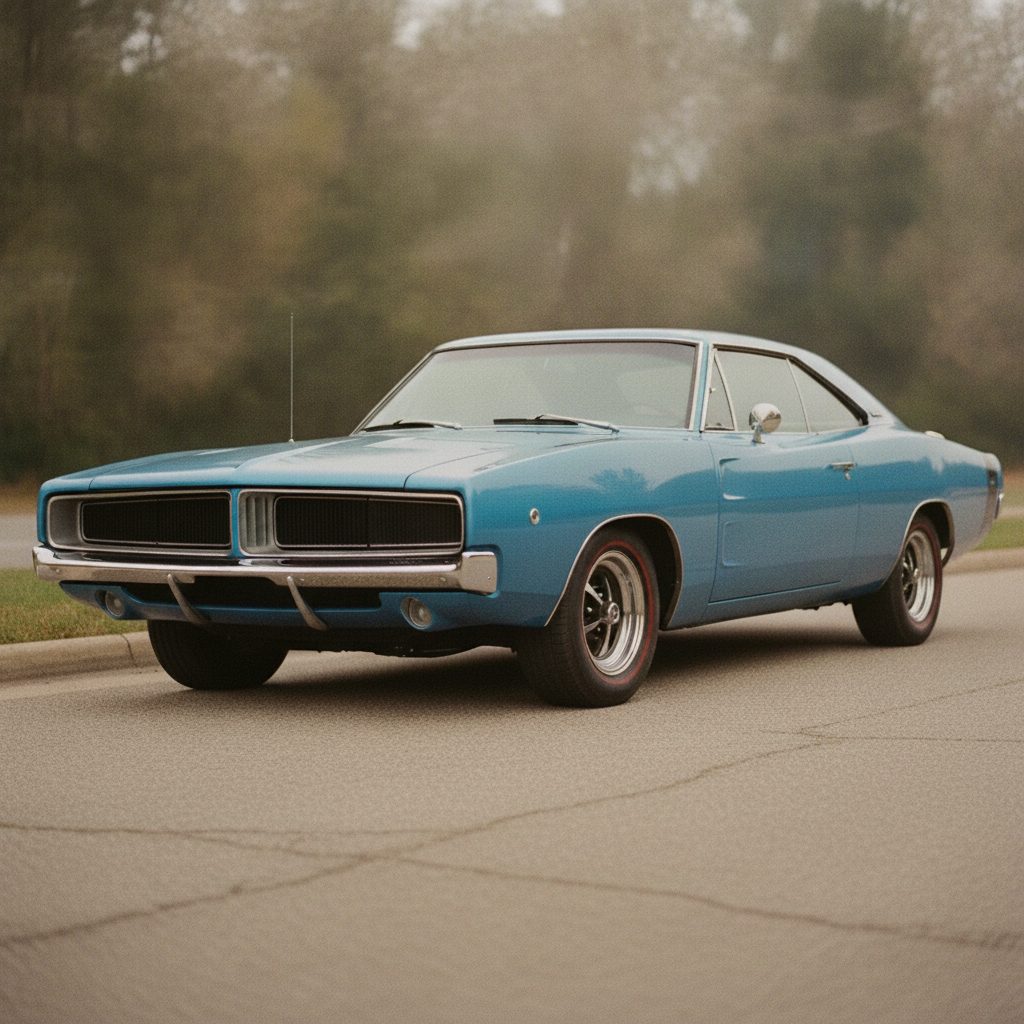
Blacked-Out B-Body Bruiser
A 426 Hemi, a menacing all-black 1969 Charger, and zero interest in subtlety.
A 426 Hemi, a menacing all-black 1969 Charger, and zero interest in subtlety.
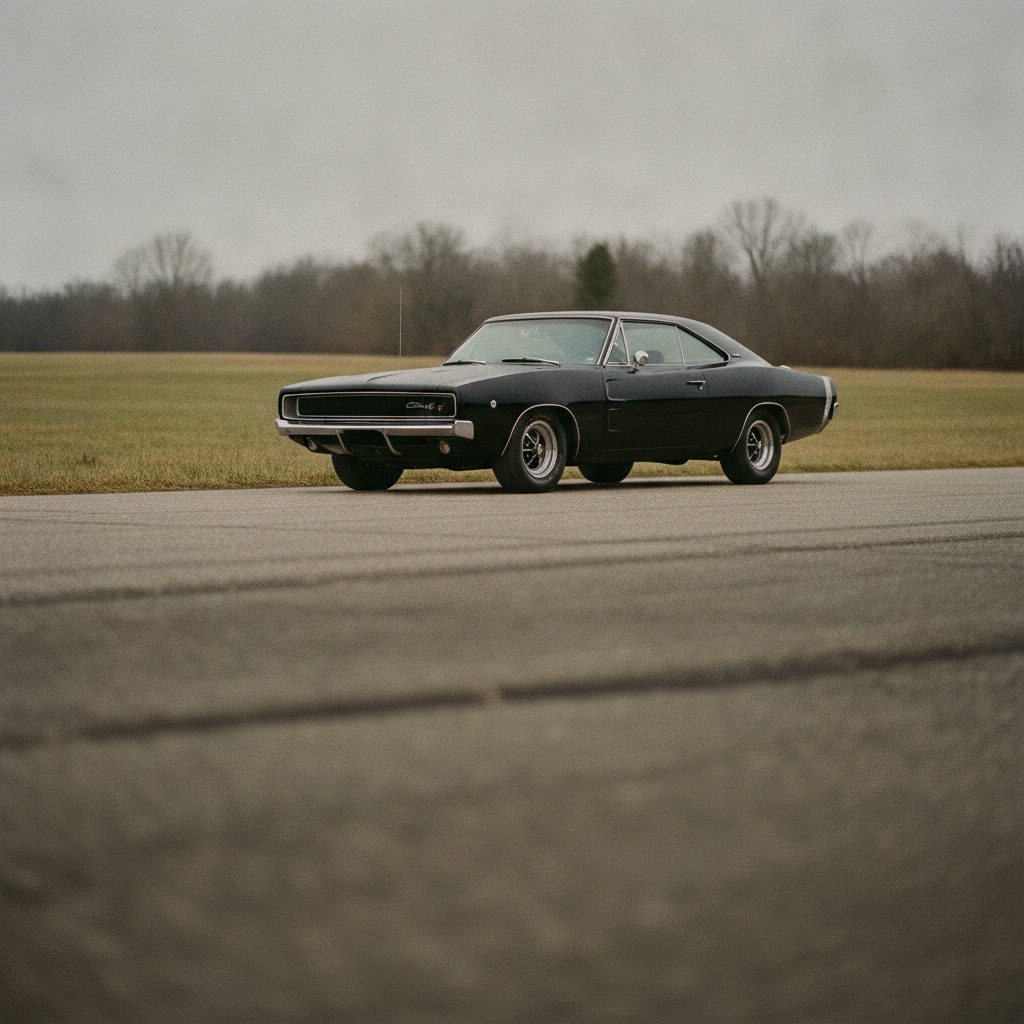
Some cars are built to be admired. This blacked-out 1969 Charger is built to be feared. A 426 Hemi under a murdered-out shell is about as intimidating as American muscle gets.
It is a study in menace. Dark paint, dark wheels, and a soundtrack that arrives before the car does. There is no billet jewelry here, no airbrushed mural, no plea for attention. The whole car reads like a closed fist, and that restraint is exactly why it works. Anyone can make a Charger loud. Making one look this quiet and hit this hard takes discipline, and discipline is the rarest option in the muscle car world.
Start with the canvas. The second-generation Charger, built from 1968 to 1970, is one of the best shapes Detroit ever produced. The coke-bottle hips, the hidden headlights, the flying-buttress rear window: it looked like it was up to something illegal while standing still. Dodge sold close to 90,000 Chargers in 1969 alone, and Hollywood has kept the car in front of cameras ever since, from a famous San Francisco chase in 1968 to a certain orange television star to the modern street-racing franchises. No muscle car has better screen credentials, and few have aged as well.
Underneath, the Charger rode on Chrysler's B-body platform, the midsize architecture it shared with the Road Runner, Super Bee, GTX, and Coronet. The B-body mattered because it was big enough to swallow any engine Chrysler made and stout enough to survive them. That combination of gorgeous sheet metal over brutally overbuilt bones is why the platform became the foundation of the entire Mopar muscle catalog.
The engine in this car needs no introduction, but the numbers still land. The 426 Street Hemi, sold from 1966 through 1971, used hemispherical combustion chambers and twin four-barrel carburetors to make a factory-rated 425 horsepower and 490 lb-ft of torque. Everyone in the industry understood the rating was conservative, a number chosen with insurance adjusters in mind rather than engineers. The nickname told the truth. They called it the elephant, for its size, its weight, and the way it stepped on everything else it met on the street.
It was also expensive, a little cantankerous in traffic, and rarely ordered when new, which is why genuine Hemi cars number in the hundreds rather than the thousands. That mix of dominance and scarcity put the real cars at the top of the Mopar market. It is also why dropping a 426 into a blacked-out 1969 Charger remains the single most intimidating move in the hobby: it pairs the best shape of the era with its most feared engine.
The murdered-out treatment is easy to do badly. Spray everything black and a car can look unfinished rather than sinister. What separates this build is how deliberate every choice is. Trim that would have been chrome is blacked out or deleted. The wheels are dark without tipping into cartoon. The stance is low enough to mean it without dragging a lip on every driveway. Every surface absorbs light instead of throwing it back, and on a shape this aggressive, that turns the whole car into a shadow with an exhaust note.
It is a philosophy, not a paint choice. The 1969 Charger's lines are strong enough that stripping the brightwork does not erase the car's character. It concentrates it, the way a good black suit concentrates a silhouette. The formula has since spread to every corner of the hobby, but the second-generation Charger is still where it lands hardest.
It shows up in your mirror before you hear it. Then you hear it.
The market long ago made its position clear. Documented, numbers-matching Hemi B-bodies trade at multiples of their 440 and 383 siblings, and the gap keeps widening as the real cars disappear into long-term collections. Builds like this one live by different math. A modified car is valued on execution, and only flawless execution holds its money. Either way, the direction of travel for second-generation Chargers has been up for years, pushed by screen fame, shrinking supply, and a generation of buyers who grew up wanting exactly this car.
For buyers, the practical takeaway is simple. Real Hemi cars are trophies and priced accordingly. Great builds are experiences, and the good ones often change hands for less than the parts and labor it took to create them. In a market this competitive, that second category is where drivers should be looking.
If this car has you shopping, go in with your eyes open. Rust is the Charger's real enemy: check the rear window channel, trunk floor, lower quarters, and frame rails, because sloppy patchwork hides everywhere on these cars. Decode the VIN and fender tag to confirm what the car actually left the factory as, since big-block and Hemi clones vastly outnumber the real ones. And budget for brakes, cooling, and tires before paint, because a straight, honest 383 car that drives right is a far better buy than a rough car wearing borrowed badges.
A Hemi Charger is a heavy car with a violent engine, and building one for the street means spending money where spectators never look. Stopping power comes first. Our guide to disc brake conversions exists for exactly this kind of build, because factory-style drums have no business trying to manage 490 lb-ft of torque. Gearing matters just as much. The right rear axle ratio turns an unruly monster into a genuinely usable street car, and our rear-end gear guide walks through those tradeoffs in detail.
Done right, the result is what this build demonstrates: menace you can actually drive to dinner, not a static sculpture of intent. Cooling, charging, and fuel delivery deserve the same attention, because a Hemi that overheats in a parade line is theater, not menace. The unglamorous hardware is what lets the glamorous hardware make its point.
The blacked-out street bruiser is one branch of a family that runs from sensible small-block cruisers to the most extreme aero experiment Detroit ever signed off on. At one end sits the everyday 318 commuter Charger. At the other sits the winged 1969 Charger Daytona, the 200-mph NASCAR homologation special that now trades for seven figures. In between lies every flavor of R/T and SE, and our Charger hub covers the full run: model history, production numbers, market movement, and the builds we feature.
The 426 Street Hemi was factory rated at 425 horsepower and 490 lb-ft of torque from 1966 through 1971. The rating was widely understood to be conservative, and well-tuned examples produced noticeably more. Modern rebuilds with better parts and tuning routinely clear 500 horsepower without stressing the design.
Dodge built close to 90,000 Chargers for the 1969 model year across all trims. Hemi-powered cars were a tiny fraction of that total, numbering only in the hundreds, which is why genuine 426 Hemi Chargers command such enormous premiums over the far more common 383 and 440 cars.
B-body is Chrysler's designation for its midsize platform of the era. It underpinned the Dodge Charger, Coronet, and Super Bee, plus the Plymouth Road Runner, GTX, Belvedere, and Satellite. The platform accepted every Chrysler performance engine up to the 426 Hemi, making it the backbone of the Mopar muscle era.
Demand comes from three directions at once: the styling is widely considered the best of the muscle era, decades of movie and television fame keep new buyers arriving, and attrition has thinned the supply. Add engine-driven premiums for big-block and Hemi cars, and clean examples keep pulling away from the broader market.
The muscle world, every morning. Auctions, builds, reveals. Free.